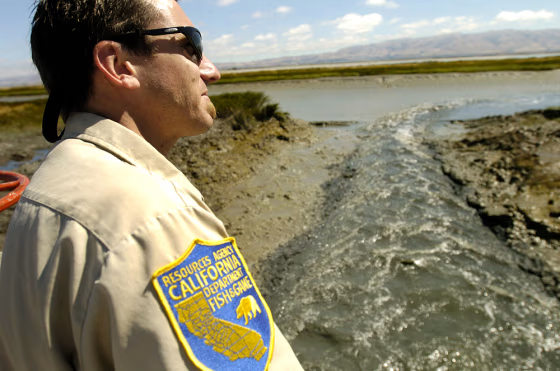
One of the nation’s most ambitious environmental-restoration projects got under way Monday as officials began the yearslong process of turning industrial salt ponds on the edge of San Francisco Bay into marshes brimming with wildlife.
The ponds were long used to produce salt: They were filled with the bay’s brackish water, and the water was allowed to evaporate, leaving behind salt that companies could sell for use in food, medicine and other products.
Under the restoration project, water is being pumped through two 4-foot-wide pipes to flush the salt out of the ponds.
New neighbors expected
The ponds will ultimately be converted into wetlands that will support wildlife. Officials expect to see new species of birds, fish and plants move in. Endangered species such as the salt marsh harvest mouse and California clapper rail are also expected to move into the area.
“This is one of the most dynamic, complicated restoration projects in the country and in the world,” Steve Thompson, who oversees California and Nevada for the U.S. Fish and Wildlife Service, said just before he and other officials turned the wheel that opened the tidal gates.
The project is the biggest effort to restore wetlands on the West Coast. It is part of a broader effort to restore 100,000 acres of bay wetlands that were diked to accommodate a growing population in the decades after the Gold Rush.

 FOR SUBSCRIBERSCBP leaders cut out of Trump ad buy decision









FOR SUBSCRIBERSA harrowing ordeal aboard an Israel-bound plane





80 percent of marshes lost
With the help of several foundations, California and the U.S. Fish and Wildlife Service last year bought 16,500 acres of salt ponds from Cargill Salt for $100 million.
FOR SUBSCRIBERSCBP leaders cut out of Trump ad buy decision
FOR SUBSCRIBERSA harrowing ordeal aboard an Israel-bound plane
The salt pond restoration marks a historic reversal for San Francisco Bay, a major stopping point for migratory birds. More than 80 percent of its original tidal marshes have been lost to farming, salt extraction and urban sprawl.
“A lot of people used to think wetlands were just wastelands,” said Marge Kolar, manager of the San Francisco Bay National Wildlife Refuge for U.S. Fish and Wildlife.