They are trekkers and seekers, backpackers and Buddhist followers, and they come here for both spiritual sustenance and for rugged hikes amid ancient monasteries and snowcapped mountains.
This northern region of India known as Ladakh is a cold desert plateau, a western extension of the Tibetan Plateau in the great Himalayas, on the frontier with China. Local residents include Tibetan refugees who crossed into the Indian Himalayas through what is known as “the roof of the world” and settled into an area now known as Little Tibet.
Monasteries perched atop small hills above the valley attract surprisingly large groups of Western tourists, including Europeans, North and South Americans, and a steady stream of young Israelis looking to decompress after completing their military service. These visitors come both to immerse themselves in Buddhist teachings and to master the rugged terrain. But hiking and reaching the temples is far easier for the locals, who are acclimated to altitudes that range from 11,500 to 23,400 feet above sea level.
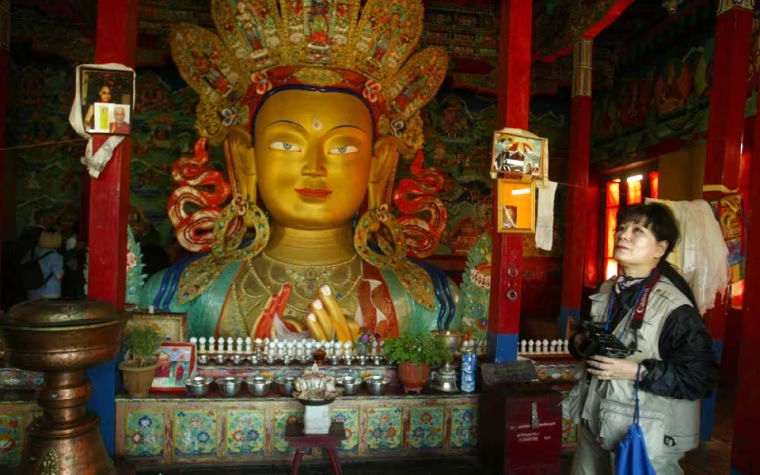
The tourists are easy to spot, clad in Bermuda shorts and toting cameras, sunglasses, colorful hats and water bottles as they fight the punishing sun while thronging to admire the marvels of craftsmanship on display at the monasteries, known as Gompas. In contrast, the locals' attire includes traditional outfits crafted from yak wool, long gowns or jackets adorned with turquoise jewelry.
The most revered contemporary lama in Ladakh, known as Drukpa, draws a large following (both Western and local). He is believed to be the 12th reincarnation of Naropa, a revered Buddhist scholar from the 10th century who is credited with introducing Buddhism to the region.
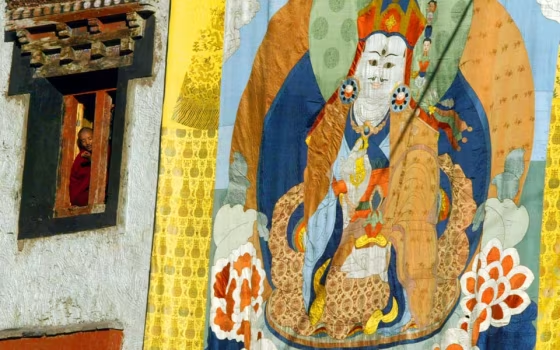
This summer, the Hemis monastery near the town of Leh hosted an extravaganza held once every 12 years: The unveiling of a Tanka, a tall building-size traditional religious painting on silk. The painting is dedicated to a reincarnation of the 11th Gyalwang Drukpa. The Tanka was accompanied by masked monks representing Buddhist deities performing tantric dances.







 FOR SUBSCRIBERSA harrowing ordeal aboard an Israel-bound plane







FOR SUBSCRIBERSThe debate over AI’s future rages on both coasts

FOR SUBSCRIBERSA harrowing ordeal aboard an Israel-bound plane
FOR SUBSCRIBERSThe debate over AI’s future rages on both coasts
But the Hemis event was just one of many annual religious festivals that draw both tourists and the Buddhist faithful, who take part in rituals—known as puyas—with great fervor. These religious adherents include khampa nomads, who are believed to be the area's original settlers; the Brokpas, the last Buddhist Indo-Iranian tribe left in the world; and the Tibetan immigrants who now populate the area.
Ladakh is also considered safe for travelers, having been spared the violence that routinely mars the peace in the nearby insurgency-affected Kashmir Valley. (Ladakh is part of the Jammu-Kashmir state but is away from the Kashmir Valley, the hub of the insurgency.)
Whether your interest lies in rugged mountaineering, a spiritual journey or a trek with nomads, Ladakh's ethereal beauty is guaranteed to enchant.
If you go
GETTING THERE: You can reach the regional airport in Leh via flights from Delhi, Srinigar and Chandigarh. From the Leh airport, take a taxi into town, where hotels and tour outfitters abound.
ACCOMMODATIONS AND ACTIVITIES: Hotels are extremely cheap by Western standards, with rooms going for $4 or $5 a night. Hotel staff and local outfitters can help arrange mountaineering trips led by sherpas, whitewater rafting on the Indrus River, monastery tours, and guided tours and camping trips on horseback or by camel.
GUIDEBOOK: "Lonely Planet India" guide ($27.99) can provide specifics on how to arrange a trip to the region, along with where to stay and what to do when you get there.
FOR MORE INFORMATION: Web sites with general information about visiting Ladakh, calendars of religious festivals and details on arranging tours include www.tourism-of-india.com/ladakh.html, www.jktourism.org/cities/ladakh/festivals/cal.htm and www.ladakh-tourism.com/contact.html. India's official tourism Web site is at www.tourisminindia.com; its office in New York can be reached at (212) 751-6840.