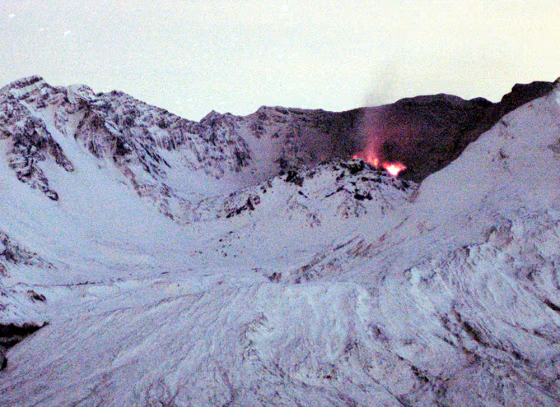
A 3.1-magnitude earthquake shook the crater at Mount St. Helens on Saturday, the strongest quake at the volcano since mid-October.







 FOR SUBSCRIBERSA harrowing ordeal aboard an Israel-bound plane







FOR SUBSCRIBERSThe debate over AI’s future rages on both coasts

U.S. Geological Survey scientists said they did not believe a major eruption was imminent — just a continuation of the minor ash and steam eruptions that have been occurring since the mountain reawakened this fall.
Saturday's earthquake appeared to be a larger version of the small earthquakes scientists have registered about once a minute for the past several weeks, the USGS said in a news release. Scientists hoped good weather Sunday and Monday would allow them to get a better look at the volcano.
A flurry of small earthquakes beginning in late September were followed by a burst of steam and ash on Oct. 1 — the first in a series of small eruptions. None of the early earthquakes measured more than 3.2 in magnitude.
FOR SUBSCRIBERSA harrowing ordeal aboard an Israel-bound plane
FOR SUBSCRIBERSThe debate over AI’s future rages on both coasts
A new lava formation began building in the crater soon after, with magma reaching the floor at the rate of 7 to 8 cubic meters — about one large dump truck load — every second. The new dome and the uplifted floor beneath it now cover 70 acres and stand 750 feet high.
Mount St. Helens, about 100 miles south of Seattle, blew apart in May 1980, killing 57 people and covering the region with gritty ash. The eruption took off the top 1,313 feet of the peak.