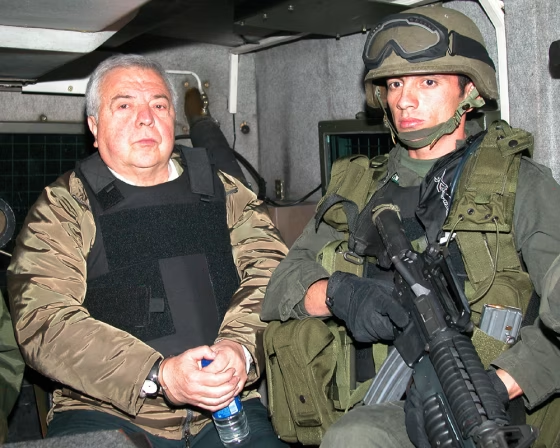
A founder of a Colombian drug cartel that became the world’s chief supplier of cocaine in the 1990s was transported to a Florida jail Saturday after being extradited from Colombia.
Gilberto Rodriguez Orejuela, 65, landed before dawn in a U.S. government plane and was driven to a downtown Miami jail. His first court appearance is set for Monday.
Rodriguez Orejuela is charged, along with his brother, Miguel, with running a drug network responsible for producing 80 percent of the U.S. cocaine supply in the 1990s. The brothers have been jailed in Colombia for nearly a decade.
Eleven others also face charges in the conspiracy, but Rodriguez Orejuela is the first defendant to be extradited to the United States. He faces life in prison if convicted.
Smuggling masters
The cartel became renowned for its ingenious methods of hiding tons of cocaine in everything from hollow lumber and concrete fence posts to chlorine cylinders, frozen broccoli and okra. Investigators believe a 15-ton seizure of cocaine-stuffed fence posts in Miami in 1991 followed more than 20 similar shipments that passed through undetected.
“The way the cocaine is concealed, it’s brilliant,” said Tom Cash, head of the Drug Enforcement Administration in Miami during the cartel’s heyday in the 1990s.
“If you go back and think of all the major traffickers from certainly the ’90s and even into the 2000s, there’s nobody in their class. They’re in a class by themselves,” Cash said. “By magnitude, by money, by class of corruption.”
 FOR SUBSCRIBERSCBP leaders cut out of Trump ad buy decision







FOR SUBSCRIBERSA harrowing ordeal aboard an Israel-bound plane





'The Chess Player'
Prosecutors said Miguel Rodriguez Orejuela was the brains behind the concealment techniques, while Gilberto, nicknamed “The Chess Player,” ran the family’s financial empire, which included 400 discount drug stores in Colombia and a fence-post plant and lumber mill.
FOR SUBSCRIBERSCBP leaders cut out of Trump ad buy decision
FOR SUBSCRIBERSA harrowing ordeal aboard an Israel-bound plane
The brothers were arrested in Colombia in 1995 but continued to control the cartel from jail, prosecutors allege. Prosecutors believe the brothers turned over day-to-day operations to Miguel’s eldest son, William Rodriguez Abadia, months before their arrests.
Gilberto Rodriguez Orejuela was handed over to U.S. authorities by Colombian President Alvaro Uribe, who has approved the extradition of more than 200 Colombians in the last two years and is considered Washington’s staunchest ally in Latin America.
Prosecutors have more wiretap evidence against Miguel Rodriguez Orejuela, but he may end up staying in Colombia due to his dialysis treatments, Cash said.
Defense attorney Jose Quinon said he will not request bond at Monday’s hearing. However, he said he plans to challenge any attempt to indefinitely detain Gilberto Rodriguez Orejuela in solitary confinement, given his age and health.