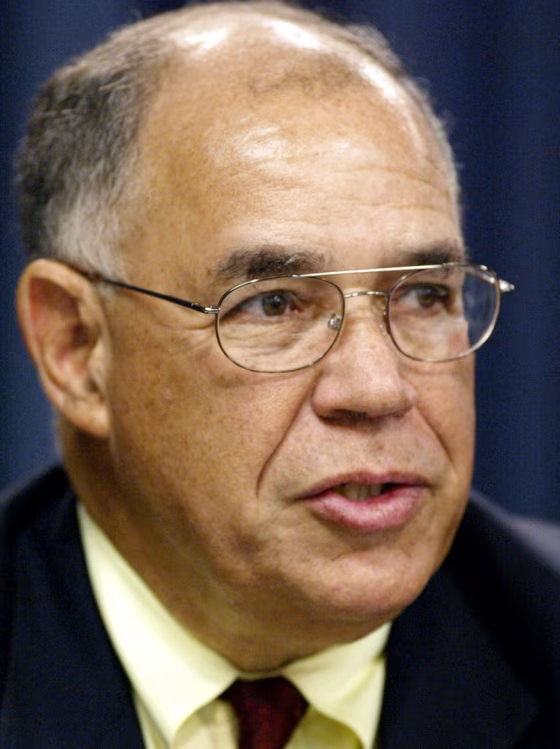
NASA’s first black shuttle commander will lead the space agency until a permanent replacement can be found for outgoing Administrator Sean O’Keefe.
Frederick Gregory has served as deputy administrator, NASA’s No. 2 position, since 2002. He was the first black to hold that position, and will be the first black to head NASA, albeit in an acting role.
The White House has yet to name a candidate to replace O’Keefe.







 FOR SUBSCRIBERSA harrowing ordeal aboard an Israel-bound plane







FOR SUBSCRIBERSThe debate over AI’s future rages on both coasts

O’Keefe’s resignation, announced in December, becomes official this week. In fact, Gregory represented NASA during a hearing Thursday before the House Science Committee.
O’Keefe, a former budget official and longtime government employee, quit to become chancellor at Louisiana State University.
FOR SUBSCRIBERSA harrowing ordeal aboard an Israel-bound plane
FOR SUBSCRIBERSThe debate over AI’s future rages on both coasts
Gregory, 64, a retired Air Force colonel and former combat pilot, flew three times in space, twice as the shuttle commander. He went on to head NASA’s safety office.
Late last month, during a tribute to those killed in America’s three spacecraft tragedies, Gregory fought back tears as he remembered the seven Challenger astronauts. He was in Mission Control for that liftoff on Jan. 28, 1986.
“It is still painful to think about those moments when we lost contact with the crew and our worst fears were realized,” he said. “It was my intent that day at that moment to press the transmit button as I saw the Challenger break up and say, ‘Godspeed, Challenger.’ I didn’t — and I should have.”