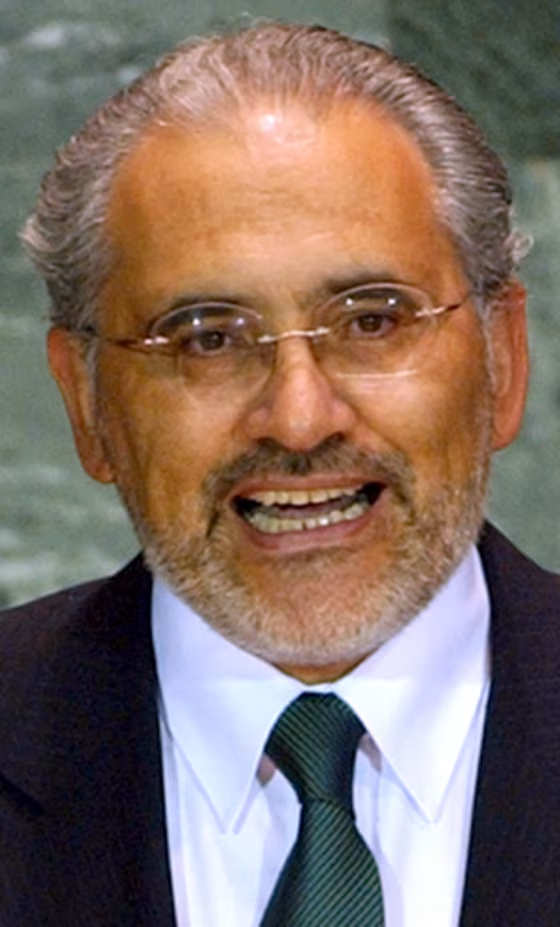
Bolivian President Carlos Mesa announced Sunday he would submit his resignation, in a nationally televised speech that came amid growing protests and frustration with his government.
Mesa took office in October 2003, succeeding President Gonzalo Sanchez de Lozada, who resigned in the wake of bloody street protests that took the lives of at least 56 people. Mesa’s government has struggled with a growing push for greater political autonomy in Bolivia’s most prosperous region.
“Tomorrow, I will submit my resignation to the president of Congress, so Congress can make a decision,” Mesa said in a nationally broadcast address.
In February, he shuffled his cabinet after massive street protests calling for regional autonomy and objecting to a planned increase in the price of fuel oil.
An autonomy drive by Santa Cruz, the nation’s richest province, had earlier forced Mesa to grant concessions clearing the way for provinces to elect their own governors, who are now appointed by the president.
Mesa, a historian and journalist turned politician, said the recent protests by a variety of political and social organizations were “blocking the country.”
Mesa blamed Indian legislator Evo Morales and social leader Abel Mamani of the neighboring city of El Alto for what he called an atmosphere of instability in the Andean nation.
As the president made his emotional address, scores of people gathered in front of the presidential palace to express support for the historian turned politician.
Mesa made clear that a final decision on whether his resignation will be accepted will be made by Bolivia’s Congress.

 FOR SUBSCRIBERSCBP leaders cut out of Trump ad buy decision









FOR SUBSCRIBERSA harrowing ordeal aboard an Israel-bound plane





FOR SUBSCRIBERSCBP leaders cut out of Trump ad buy decision
FOR SUBSCRIBERSA harrowing ordeal aboard an Israel-bound plane
Whether Congress will accept his resignation remains uncertain. If Congress accepts the resignation its president, Sen. Hormando Vaca Diez, would become Mesa’s constitutional successor.
Morales, a congressman who is also the leader of the nation’s coca leaf growers, has announced a nationwide roads blockade unless congress passes legislation increasing taxes levied on foreign oil companies from 15 to 50 percent of their sales.
Mesa said “the international community rejects such a law.”
Morales appeared surprised by Mesa’s announcement, which he called “a blackmail by the president.” He said his party, the Movement Toward Socialism, was to meet on Monday to make a decision on Mesa’s announcement.
Mesa’s government has faced continued protests in recent weeks from groups backing as series of demands, ranging from constitutional amendments to the establishment of rural schools.