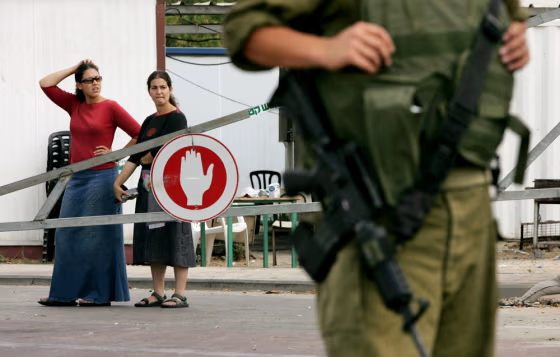
Israeli police commandos stormed a hotel in a Gaza settlement on Thursday and ejected 150 radical Jews from a bastion of resistance to Israel's planned withdrawal from the occupied territory.
Police scaled ladders to enter the barricaded seaside hotel after the army declared a closed military zone in Jewish settlements in Gaza to put an end to an influx of ultranationalists bent on scuttling the August withdrawal.
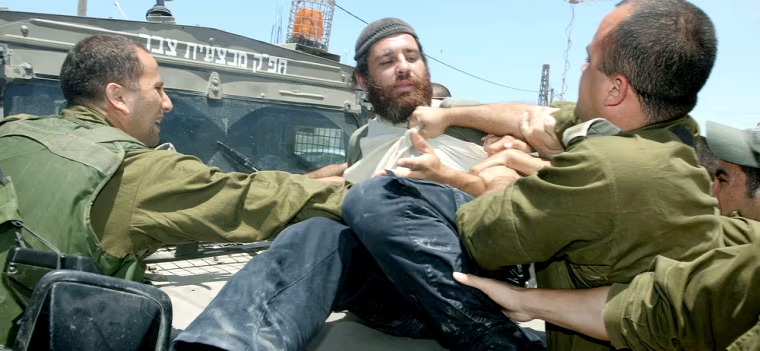
The heavily armed commandos broke down room doors and gave chase through the Palm Beach Hotel compound to grab the religious squatters. Some of them were women clutching small children who had bound themselves to furniture.
They were carried or dragged kicking and screaming out of the white stucco complex and some were handcuffed in a lightning operation completed in 30 minutes and without casualties, security commanders said. There were four arrests.
"They have all been removed. There's no doubt they were preparing for siege here. We found boarded-up windows and supplies of tires and bottles filled with fuel," said General Dan Harel, the Israeli military commander in the Gaza region.
Nadia Matar, a far-right activist leader, shouted at police ousting her from the hotel: "Cossacks! Cossacks! Shame on the government for expelling Jews as if they were in Russia."
Harel said on Israel Radio that the raid was provoked by "hooligans and lawbreakers with no regard for human life."
Harel said such radicals were responsible for the attempted "lynching" on Wednesday of a Palestinian youth stoned from close range in a clash sparked by Jewish youths' seizure of an outpost in the nearby Palestinian neighborhood of al-Mawasi.
Prime Minister Ariel Sharon vowed Israel would block far-right Jews from obstructing the pullout. "We will deal with these phenomena with a heavy hand since they threaten our very existence here as a Jewish and democratic country," he said.
Potential peacemaking at stake
Sharon told economists the pullout would start on schedule and "begin in seven weeks time ... I promise that I will not be deterred from implementing the evacuation from Gaza because of threats and intimidation from political opponents."
He aims to evacuate all 21 Jewish settlements in Gaza and four of 120 in the West Bank, a disengagement U.S.-led mediators hope will foster a "road map" peace process between Israel and Palestinians seeking statehood in occupied lands.
While opinion polls have shown most Israelis favor his plan, Sharon has been confronted with escalating protests by fringe ultranationalists, some of whom have threatened his life.
Thursday's raid amounted to a dress rehearsal for security forces being trained to handle anticipated resistance among the 8,500 established Gaza settlers due to be evacuated in August.
An army spokeswoman said the military closure was imposed to pre-empt further "extremist" violence that could inflame Gaza, where most Palestinian militants have been observing a cease-fire key to a smooth pullout sought by Sharon.
Threat of more rioters
"(We have) information that further groups of Israelis may be moving towards Gaza in an attempt to provide back-up for the rioters," it said, alluding to the Kach activists in al-Mawasi.
Once the radical threat was removed, the military ban on non-residents would be lifted, it said.







 FOR SUBSCRIBERSA harrowing ordeal aboard an Israel-bound plane







FOR SUBSCRIBERSThe debate over AI’s future rages on both coasts

FOR SUBSCRIBERSA harrowing ordeal aboard an Israel-bound plane
FOR SUBSCRIBERSThe debate over AI’s future rages on both coasts
The settlers' YESHA council threatened to bring throngs of protesters to the Gaza area unless the restrictions were lifted.
The Palm Beach Hotel, derelict for years, was converted two months ago into an anti-evacuation redoubt by ultranationalists from hard-line settlements in the occupied West Bank.
Religious rightists say Sharon's disengagement strategy betrays Jewish claims on biblical land and appeases Palestinian militancy that has included many suicide bombings.
Palestinians welcome any Israeli withdrawals from lands occupied in the 1967 Middle East war. However, they fear Sharon intends to leave Gaza mainly in order to cement Israel's hold on much larger settlements in the West Bank.