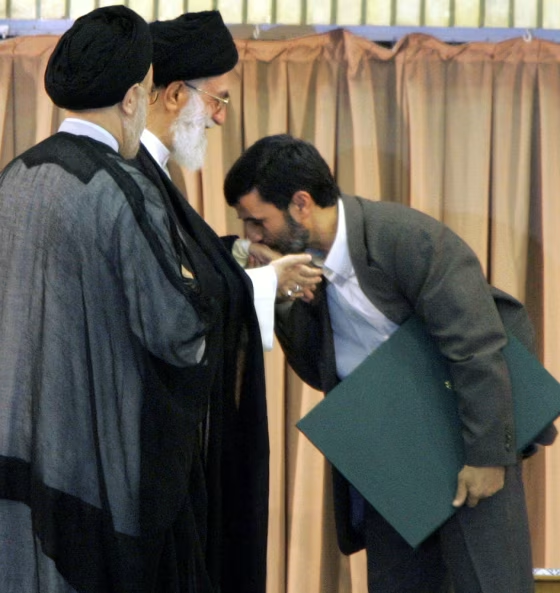
Conservative Mahmoud Ahmadinejad became Iran’s new president on Wednesday, taking power amid international turmoil over Tehran’s nuclear ambitions and his own past.
The 48-year-old conservative former mayor of Tehran, deeply loyal to the values of Iran’s 1979 Islamic revolution, won a landslide election victory in June and was appointed president by Supreme Leader Ayatollah Ali Khamenei.
“I therefore ... approve the vote of the nation and appoint Dr. Mahmoud Ahmadinejad as the president of the Islamic Republic of Iran,” said a text by Khamenei read out at an official ceremony by outgoing reformist President Mohammad Khatami.
Ahmadinejad takes the helm as Iran edges closer to possible U.N. Security Council sanctions over its nuclear program, which Washington says is a smokescreen for building atomic bombs. Tehran insists its ambitions are peaceful.
In order to break this impasse, diplomats from the European Union have been trying to get Iran to surrender its nuclear fuel work in return for economic incentives.
But Iran says such a compromise is unacceptable and that it will resume part of the nuclear fuel cycle, a move that threatens to end EU mediation.
Opaque system
In Iran’s opaque political system, analysts are split on whether top policy makers are somehow setting the stage for Ahmadinejad to save the day with a new deal or whether he is irrelevant to their greater national goals.
If this mounting international pressure on the nuclear program was not enough, Ahmadinejad also faces numerous accusations about his past.

 FOR SUBSCRIBERSCBP leaders cut out of Trump ad buy decision









FOR SUBSCRIBERSA harrowing ordeal aboard an Israel-bound plane





FOR SUBSCRIBERSCBP leaders cut out of Trump ad buy decision
FOR SUBSCRIBERSA harrowing ordeal aboard an Israel-bound plane
The United States thinks he played a key role in the storming of its embassy in Tehran immediately after the revolution, something which he and those who took part deny.
Austrian investigators are looking into whether he was involved in the murder of Kurdish dissidents in Vienna in 1989. Again, his aides deny the charges.
Ahmadinejad also faces massive economic challenges in a country where growth is slipping and oilfields, the country’s lifeblood, are losing capacity.
The victory of the former Revolutionary Guard sent ripples of fear through the investment community, compounded when he said he would clean out corruption in the oil industry and give no preferential treatment to foreign firms.
But analysts say investors should take a “wait and see” approach, arguing that Ahmadinejad took a pragmatic line as mayor of Tehran and could well do so again as president.