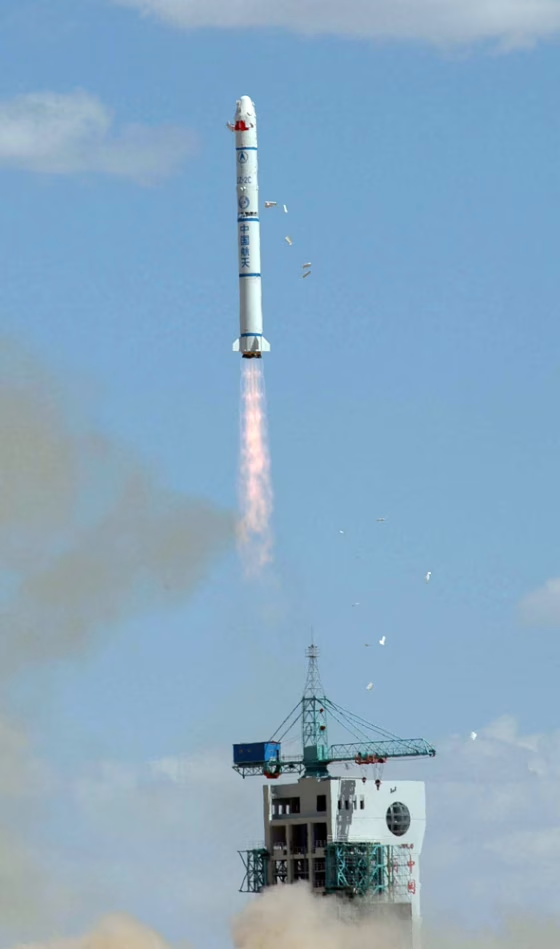
China plans to launch its first unmanned lunar flight by 2007 in a three-phase mission that aims to bring back rock samples, state media said on Tuesday.
In the second stage, a lunar vehicle would land on the moon by 2012 and by 2017 the rock samples could be collected, the report said quoting aerospace officials.
"Scientists hope to get to know the moon's environment and analyse the composition of lunar rocks," the China Daily quoted Luan Enjie, chief commander of China's lunar exploration programme, as saying.







 FOR SUBSCRIBERSA harrowing ordeal aboard an Israel-bound plane







FOR SUBSCRIBERSThe debate over AI’s future rages on both coasts

China has developed an ambitious space program since its first Long March rocket blasted off in 1970. It became the third country to successfully send a man into space in October 2003 and regularly sends up research satellites.
FOR SUBSCRIBERSA harrowing ordeal aboard an Israel-bound plane
FOR SUBSCRIBERSThe debate over AI’s future rages on both coasts
China's lunar orbiter weighed more than two tons and was expected to fly for a year, collecting information for a mapping of the moon's surface and studying its mineral content, Luan said.
He did not say when China might be sending an astronaut to the moon, but said the 2017 mission would provide data for a manned expedition.