By Andrea Thompson
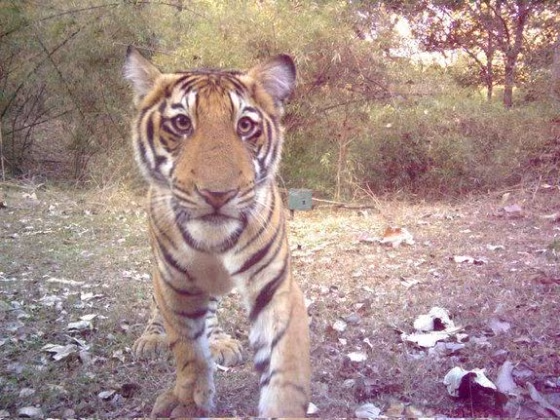
Cats, whether house-size or larger, are known for their curiosity. A tiger cub in India's Bhadra Tiger Reserve was no exception, as it was photographed inspecting a remote camera set up in the park to monitor its species.







 FOR SUBSCRIBERSA harrowing ordeal aboard an Israel-bound plane







FOR SUBSCRIBERSThe debate over AI’s future rages on both coasts

The cub is estimated to be about 4 to 5 months old, according to a release from the Wildlife Conservation Society (WCS), which conducts animal surveys in the area and helped place the camera that captured the young tiger's image. A second camera can be seen in the background of the picture.
The Bhadra reserve stands as an example of tiger conservation success, the WCS notes, with their surveys showing that tiger numbers are rising. The cameras the group places help them identify tigers by their stripe patterns, which are unique to each animal.
FOR SUBSCRIBERSA harrowing ordeal aboard an Israel-bound plane
FOR SUBSCRIBERSThe debate over AI’s future rages on both coasts
Local conservationists have joined the WCS to push for more protections in the reserve, as well as opposing forest exploitation, illegal settlements and other development projects that could damage the habitat of the tigers and their prey, the group said in the statement. An increase in the tigers' prey has also contributed to the tigers' own increasing numbers.
There are six surviving subspecies of tiger and they range from being listed as endangered or critically endangered by the International Union for Conservation of Nature. Tiger numbers have decreased by about 95 percent over the past century, with only about 3,200 tigers thought to exist in the wild.
Follow Andrea Thompson @AndreaTOAP, Pinterest and Google+. Follow OurAmazingPlanet @OAPlanet, Facebook and Google+. Original article at LiveScience's OurAmazingPlanet.
Copyright 2013 LiveScience, a TechMediaNetwork company. All rights reserved. This material may not be published, broadcast, rewritten or redistributed.