By Becky Oskin
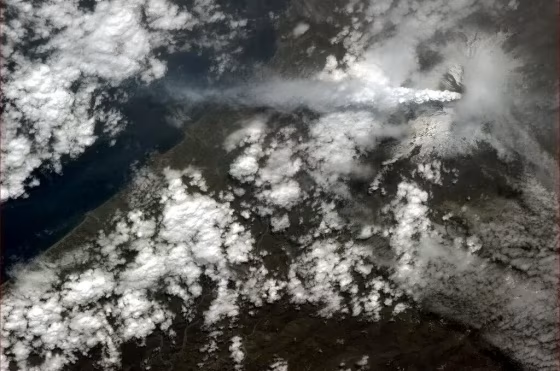
Astronaut Chris Hadfield, the planet's most popular space shutterbug, snapped a spectacular photo of Italy's Mount Etna volcano streaming ash toward the sea early Thursday.







 FOR SUBSCRIBERSA harrowing ordeal aboard an Israel-bound plane







FOR SUBSCRIBERSThe debate over AI’s future rages on both coasts

The volcano experienced the latest in a series of strong paroxysms, or short violent bursts, on Wednesday. For the first time, explosions and ash spewed into the air from Mount Etna's Voragine crater, while webcams trained on the fiery summit showed activity at Bocca Nuova crater as well.
Mount Etna's current eruption started with a stunning dawn lava fountain on Feb. 19, caught on video, followed in quick succession by three more paroxysms over the next two days. Then, on Feb. 23, lava fountains shot out from Bocca Nuova crater to a height of more than 2,600 feet (800 meters).
FOR SUBSCRIBERSA harrowing ordeal aboard an Israel-bound plane
FOR SUBSCRIBERSThe debate over AI’s future rages on both coasts
Ash cloaks the volcano's snow-covered slopes, but not enough to deter skiers. Small lava flows have also emerged from the most active craters. The volcano has four distinct craters at its summit: the two central craters, Bocca Nuova and Voragine; the northeast crater; and a new southeast crater.
Hadfield, an astronaut for the Canadian Space Agency, is aboard the International Space Station. He regularly posts amazing images of Earth on his Twitter feed.
Reach Becky Oskin at boskin@techmedianetwork.com. Follow her on Twitter @beckyoskin. Follow OurAmazingPlanet on Twitter @OAPlanet. We're also on Facebook and Google+.
- Astronaut's Amazing Photos of Earth From Space
- Image Gallery: Volcanoes from Space
- 50 Amazing Volcano Facts
Copyright 2013 LiveScience, a TechMediaNetwork company. All rights reserved. This material may not be published, broadcast, rewritten or redistributed.