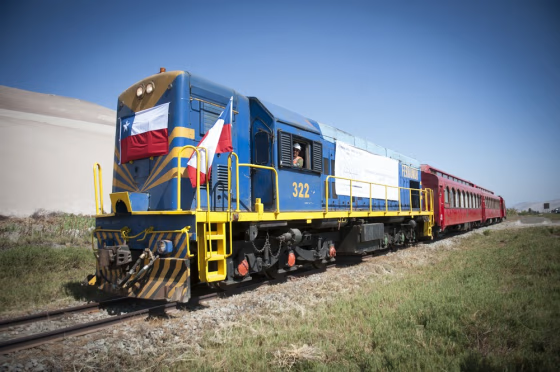
One of the world's most remarkable railway lines celebrated its centenary on Monday. The 273-mile track traverses desert and mountain landscapes as it rises from sea-level in the Chilean port of Arica to a height of 13,800 feet en route to the Bolivian city of La Paz.
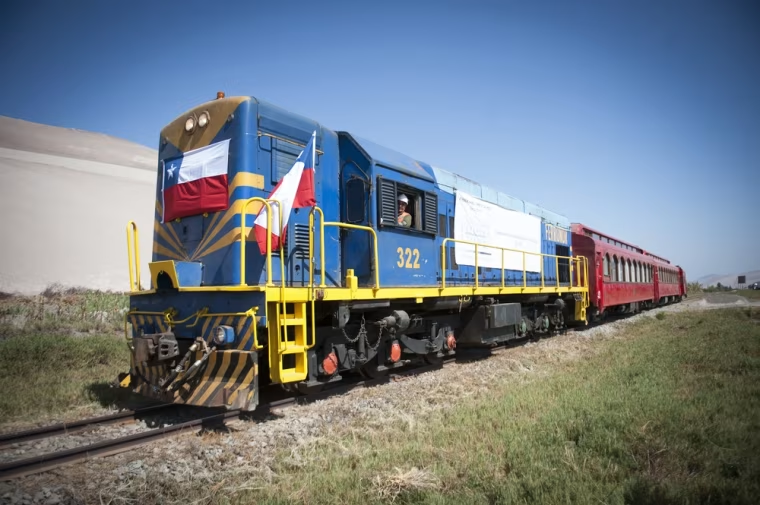
Inaugurated on May 13, 1913, the line has a colorful history and remains a source of controversy, according to a report by BBC News:







 FOR SUBSCRIBERSA harrowing ordeal aboard an Israel-bound plane







FOR SUBSCRIBERSThe debate over AI’s future rages on both coasts

FOR SUBSCRIBERSA harrowing ordeal aboard an Israel-bound plane
FOR SUBSCRIBERSThe debate over AI’s future rages on both coasts
The railway was built by Chile to compensate Bolivia for its loss of land during the 1879-1883 War of the Pacific.
Chile won the war and annexed a swathe of Bolivian land roughly the size of Greece, leaving Bolivia landlocked.
The idea behind the railway was to give Bolivia access to the sea for its exports. It cost Chile £2.75m to build - around £195m ($300m) in today's money.
The Bolivians still demand sovereignty over at least a part of their former Pacific coastline, and last month took their case to the International Court in The Hague.