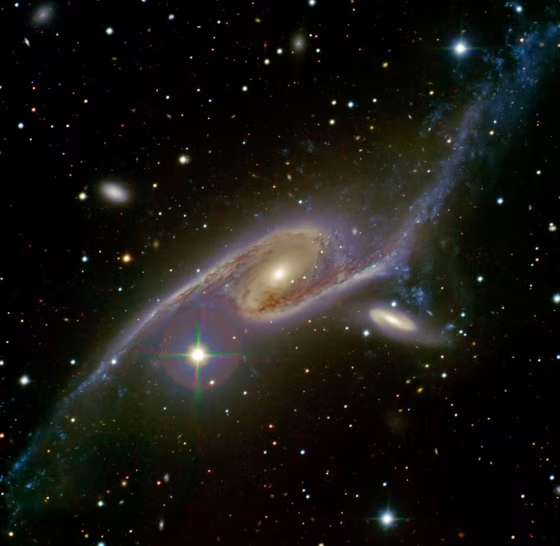
This picture of the galaxies NGC 6872 and IC 4970 is certainly pretty. The two spirals spin around each other in a gravitational dance that even astronomers compare to a tango. But the Australian high-school students who created the image said they were going for "more than just a pretty picture." That may be one of the reasons why the team from the Sydney Girls High School Astronomy Club won this year's competition to produce scientifically useful and aesthetically pleasing images using the Gemini Observatory. The data for this image came from the Gemini Multi-Object Spectrograph on the Gemini South telescope in Chile.







 FOR SUBSCRIBERSA harrowing ordeal aboard an Israel-bound plane







FOR SUBSCRIBERSThe debate over AI’s future rages on both coasts

FOR SUBSCRIBERSA harrowing ordeal aboard an Israel-bound plane
FOR SUBSCRIBERSThe debate over AI’s future rages on both coasts
In the essay accompanying their entry, the students said the picture serves "to illustrate the situation faced by the Milky Way and the Andromeda galaxy in millions of years." That's right, folks ... our galaxy is on course to mix it up with the galaxy next door someday. But don't put on your dancing shoes just yet. The process will probably take billions rather than millions of years. Check out this report to learn more about our future cosmic tango, and click on over to the Gemini website for more about the Australian Gemini student competition.
Join the Cosmic Log community by clicking the "like" button on our Facebook page or by following msnbc.com science editor Alan Boyle as b0yle on Twitter. To learn more about my book on Pluto and the search for planets, check out the website for "The Case for Pluto."