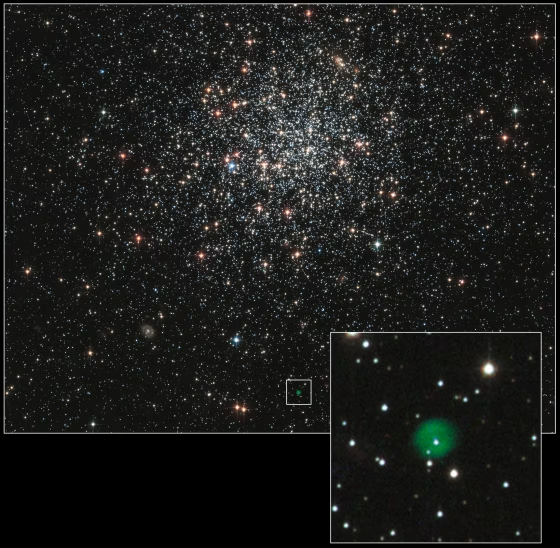
The latest picture from the Hubble Space Telescope reveals a glittering star cluster in the Large Magellanic Cloud, one of the Milky Way’s satellite galaxies, plus a poor little greenish planetary nebula that just went poof.
















The hazy cloud of stars is NGC 1846, a globular cluster containing thousands of stars on the outskirts of the dwarf galaxy in the southern celestial hemisphere, about 160,000 light-years from Earth. The Large Magellanic Cloud and its smaller sibling (known as the Small Magellanic Cloud, what else?) are assemblages of stars that have been kicking around the Milky Way's environs for eons.
Aging bright stars shine with bluish and reddish tones, while the middle-aged stars give off white light. The Hubble team says the most intriguing single object in the image isn't any of the thousands of stars that are bursting with life, but the little green puff highlighted in the inset picture. That's the glowing shell of gas created when a dying star puffs away its outer layers. It's not completely clear whether the puffball is part of the cluster, but measurements of the motions of the stars in the cluster and the stellar remnant at the center of the nebula suggest that it is.
Which is more beautiful, the bright lives of the thousands or the deep-toned death of the one? You tell me.
More about planetary nebulae:
- Hubble sights a starry necklace
- Astronomers aim to score cosmic goal
- New clues to amazing space shapes
- Student 'hoots' for Owl Nebula in contest
- Dying star belches up a toxic brew
- Slideshow: Hubble's greatest hits
Connect with the Cosmic Log community by "liking" the log's Facebook page or following @b0yle on Twitter. You can also add me to your Google+ circle, and check out "The Case for Pluto," my book about the controversial dwarf planet and the search for new worlds.