Photographers are having a field day chronicling the hot flashes on our increasingly active sun.
For the past couple of weeks, astronomers have been tracking groups of sunspots as they move across the sun's disk. Those active regions have been shooting off flares and outbursts of electrically charged particles into space — signaling that the sun is ramping up toward the peak of its 11-year activity cycle. Physicists expect that peak, also known as "Solar Max," to come in 2013.
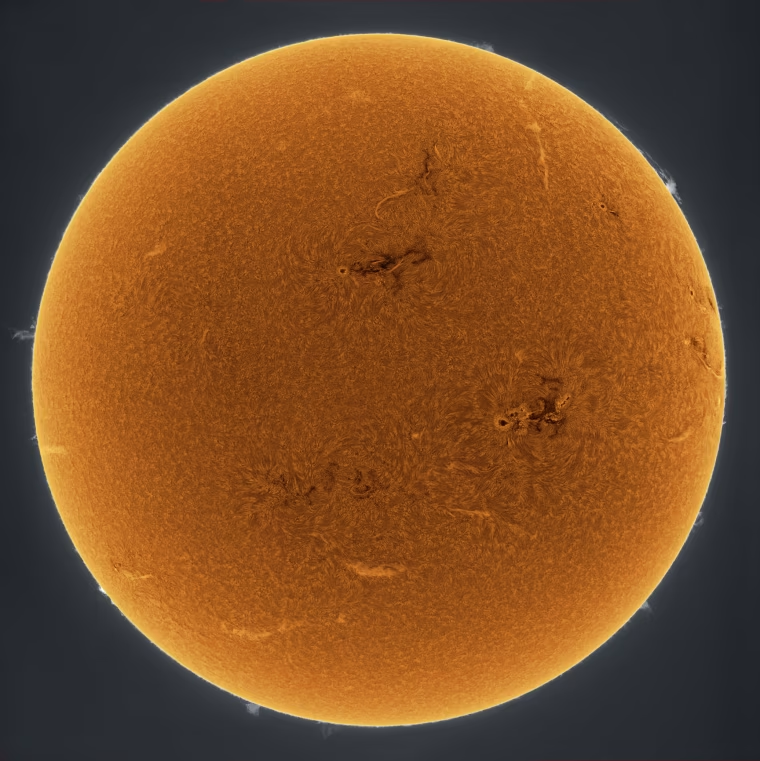
A full frontal view from New York photographer Alan Friedman shows the current activity in detail, as seen in a particular wavelength known as hydrogen-alpha. The colors have been tweaked to turn the sun look like a warm, fuzzy ball, with lacy prominences licking up from the edge of the disk.







 FOR SUBSCRIBERSA harrowing ordeal aboard an Israel-bound plane







FOR SUBSCRIBERSThe debate over AI’s future rages on both coasts

FOR SUBSCRIBERSA harrowing ordeal aboard an Israel-bound plane
FOR SUBSCRIBERSThe debate over AI’s future rages on both coasts
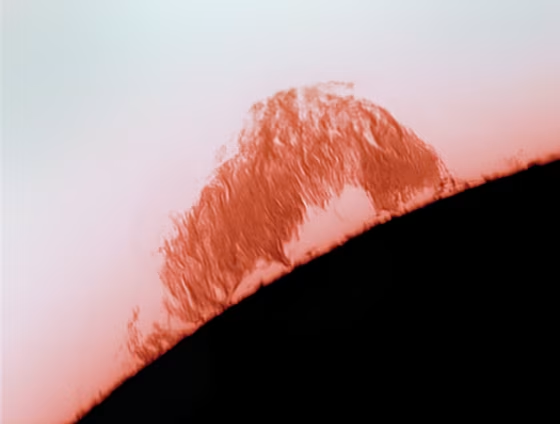
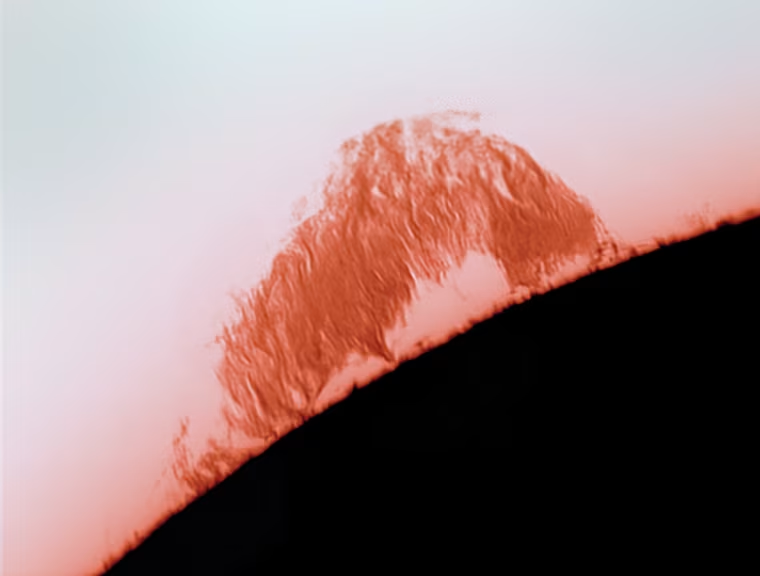
Friedman focused on one flare in particular over the weekend: In the picture you see at right, the colors have been reversed to produce a dark sun and dusky prominence against the light background of space.
"The prominence was huge (approximately 150,000 miles long from our perspective and more than 50,000 miles high) but it was a little faint," Friedman told me in an email. "I found that the subtle structures showed better when the image was reversed. I was holding a public observing event at the Buffalo Museum of Science on Saturday when this was taken, very late in the afternoon. It took all my strength to peel the eyes from my telescope and put in the camera for a few minutes. The sun was putting on the most spectacular visual show I can recall in quite a few years."
Another spectacle took place on Monday, when a powerful magnetic filament — rippling more than 600,000 miles (1 million kilometers) across the sun's disk at one point — snapped off a huge flare. SpaceWeather.com offers an animated image of the event, courtesy of NASA's Solar Dynamics Observatory, and here's a YouTube video that shows the filament in action:
More pictures of the sun's flare-ups are available from the SpaceWeather.com website, and there might be still more to come. "Readers with solar telescopes are encouraged to monitor developments," SpaceWeather.com's Tony Phillips says.
More hot flashes from the sun:
- Good news! Solar flare won't destroy Earth
- Stunning view of the sun ... and Discovery?!
- Pictures and video: Stare at the sun
- Slideshow: Month in Space Pictures
Connect with the Cosmic Log community by "liking" the log's Facebook page, following @b0yle on Twitter or following the Cosmic Log Google+ page. You can also check out "The Case for Pluto," my book about the controversial dwarf planet and the search for new worlds.