Florida officials announced on Thursday a breakthrough arrest in the 1996 cold case murder of a man who was brutally stabbed 73 times — thanks to DNA found on several beer cans.
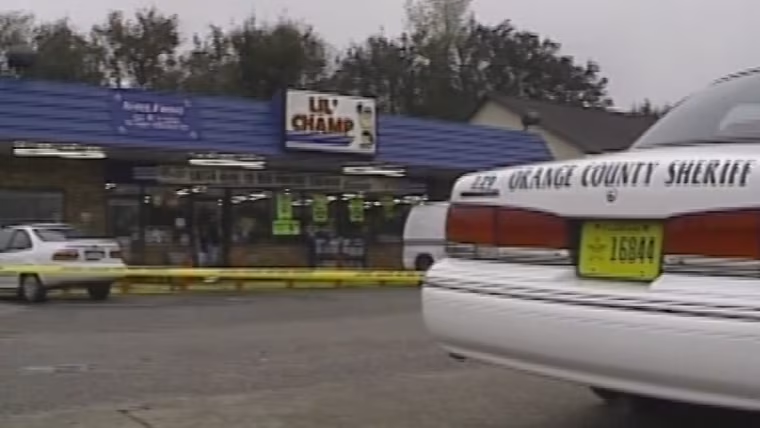
Terence Paquette, 31, was found murdered on Feb. 3, 1996, in the bathroom of the Lil' Champ convenience store on Clarcona Ocoee Road in Orlando, where he worked. His throat was slit and cash was missing from the store, the Orange County Sheriff's Office said.
Sheriff John Mina described the murder scene as “gruesome” during a press conference Thursday. He said the blood from someone who wasn't Paquette was found "all over the store," but officials couldn't find a DNA match.
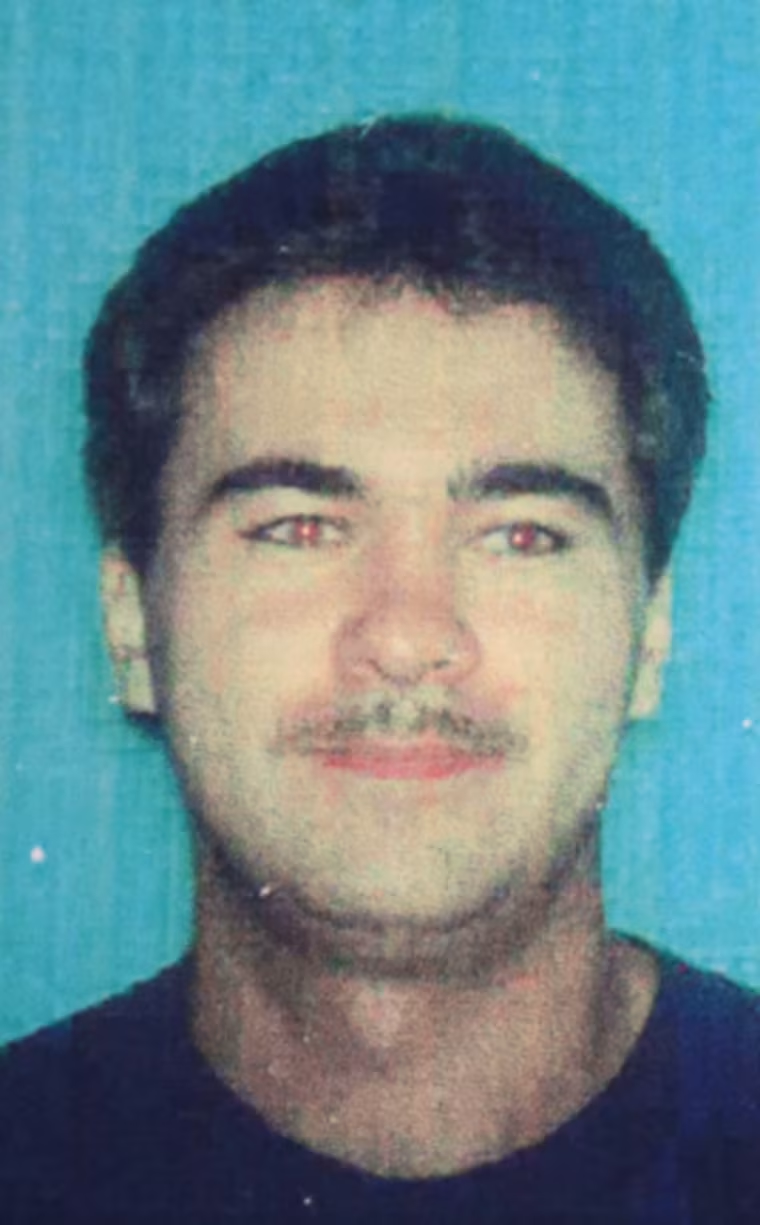
The case remained unsolved for 25 years until advances in genetic genealogy helped investigators hone in on the suspect, 54-year-old Kenneth Robert Stough, Jr.
Paquette’s case was reopened in 2003 and the DNA from the crime scene was entered into the FBI’s Combined DNA Index System, also known as CODIS, but without any matches, Mina said.
In 2019, a cold case unit at the sheriff’s office was formed and investigators began to re-examine Paquette’s death.







 FOR SUBSCRIBERSA harrowing ordeal aboard an Israel-bound plane







FOR SUBSCRIBERSThe debate over AI’s future rages on both coasts

FOR SUBSCRIBERSA harrowing ordeal aboard an Israel-bound plane
FOR SUBSCRIBERSThe debate over AI’s future rages on both coasts
In 2021, officials enlisted the help of a genetic genealogy specialist with the Florida Department of Law Enforcement (FDLE) and used a DNA sample from a bloodstain on a freezer handle in the store, then determined the blood came from one of three brothers.
“We take the sample from the lab. We have a vendor turn it into a data file that can be uploaded to two public genetic genealogy websites — Family Tree and GEDmatch.com,” Debbie Abney, with FDLE, said at the press conference.
From there, officials built a family tree from the sample, which narrowed the search for the suspect down to the siblings.
Investigators then looked into those brothers and honed in on Kenneth Stough, who previously worked at the store and lived across the street from the shop in 1996.
In order to get a sample of Stough’s DNA to tie him to the case, investigators tracked him to a gas station in Lake County, where Stough was seen throwing away several beer cans. Those cans were later swabbed for DNA and matched the DNA from the crime scene, officials said.
Stough was arrested on Tuesday and has been charged with first-degree murder with a firearm and robbery with a deadly weapon, according to the arrest affidavit.
The public defender’s office that represents Stough declined to comment on the arrest.
Det. Brian Savelli, who worked on the case, said Stough had a record of arrests but for minor incidents. Savelli said Stough admitted to working at the store, but did not confess to the crime.
Officials said they’re still working on a motive.
All of Paquette’s family has since passed away, but his friends were notified that an arrest was made in the case, Savelli said.
“We never, ever forget about these cases,” Sheriff Mina said. “Just because we don’t make an arrest in a case in a day or in a few weeks or even a few months doesn’t mean we give up on our victims or their families.”