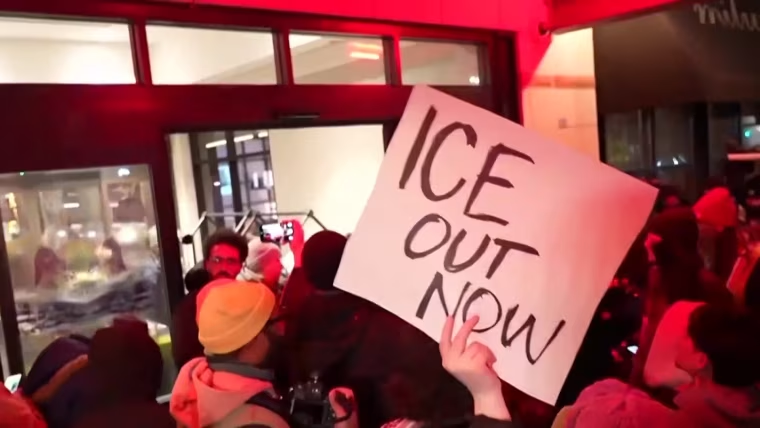
MINNEAPOLIS — In the months before an ICE officer fatally shot Renee Nicole Good on a residential street this week, residents in a south Minneapolis neighborhood had grown accustomed to the sound of car horns and shrieking whistles — alarms meant to signal that Immigration and Customs Enforcement officers were nearby.
The sounds had become a strange new normal for the diverse Central neighborhood. Across the country, similar tactics have emerged as a grassroots response to President Donald Trump’s escalation of immigration arrests and deportations.
But on Wednesday, an encounter between ICE officers and Good, an American citizen, ended in gunfire, with an officer killing her in the middle of the street and sending shock waves through a city already shaped by repeated confrontations with police violence.
“It’s terrifying. It’s horrible. These are the conversations that now we have to have with our children and the anxiety that it causes them,” said Ginya, 41, who lives a few houses away from where Good was killed. Ginya asked that her last name not be used out of fear for her family’s safety. “It’s heartbreaking that any of this is happening, and we just want ICE to leave.”
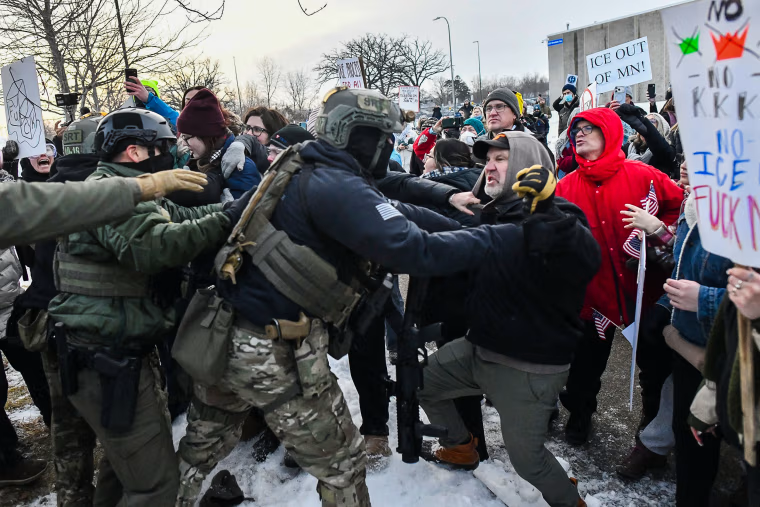
Trump said on social media after the shooting that Good “violently, willfully and viciously ran over the ICE Officer.” Homeland Security Secretary Kristi Noem accused Good of trying to run the officer over, saying “she hit him” in “an act of domestic terrorism.” The agency called her a violent rioter. All said the officer fired in self-defense.
Minneapolis Mayor Jacob Frey sharply rejected DHS’ narrative. After having viewed a video of the incident, Frey told reporters Wednesday that federal officials were trying to “spin this as an action of self-defense.” Eyewitness accounts and video reviewed by NBC News raise questions about whether the vehicle posed an immediate threat, though key details remain under investigation.

 FOR SUBSCRIBERSCBP leaders cut out of Trump ad buy decision









FOR SUBSCRIBERSA harrowing ordeal aboard an Israel-bound plane





FOR SUBSCRIBERSCBP leaders cut out of Trump ad buy decision
FOR SUBSCRIBERSA harrowing ordeal aboard an Israel-bound plane
For some residents, Good’s killing reopened deep wounds in a city still reckoning with the police murder of George Floyd, which occurred just blocks away in May 2020 and sparked nationwide protests against police brutality.
“I think it’s a really big trauma and tear on the city,” said Amalia Perrier, 23, who was at the site of a makeshift memorial Thursday night near where Good was killed.
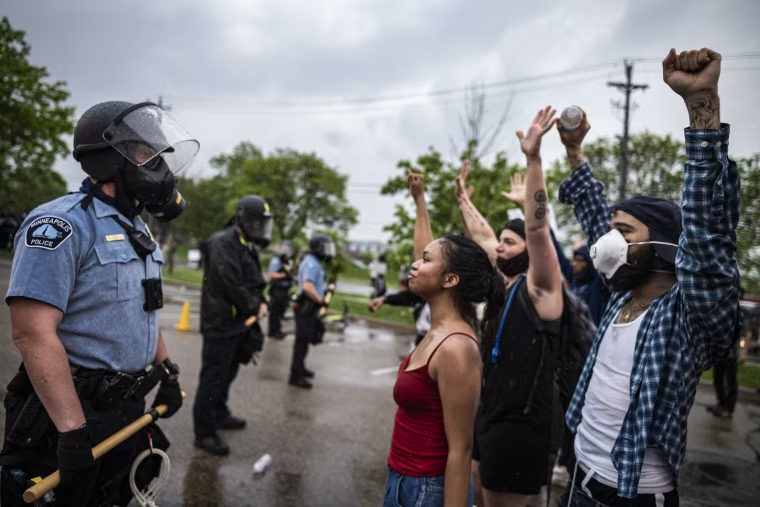
Perrier said she and other Minneapolis residents were saying, “I can’t believe this is happening here again. But one thing about Minneapolis is we are really acutely organized. It’s a very, very strong support system here, and we’re always going to rally for our community and neighbors.”
That reflex to organize, protest and provide mutual aid has been shaped by years of unrest following deadly encounters between law enforcement and residents.
In recent years, demonstrators have taken to the streets after the killings of Philando Castile, Justine Damond, Daunte Wright and Amir Locke, demanding accountability and police reforms. Their names have since become part of the city’s collective memory, invoked whenever violence involving authorities resurfaces.
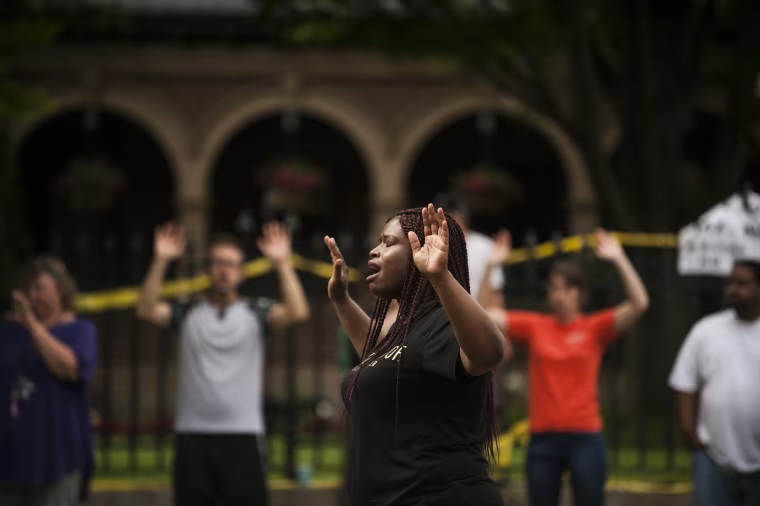
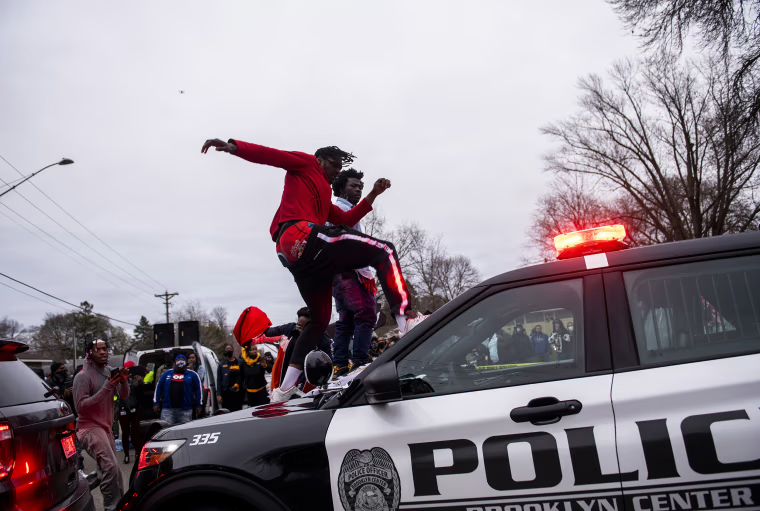
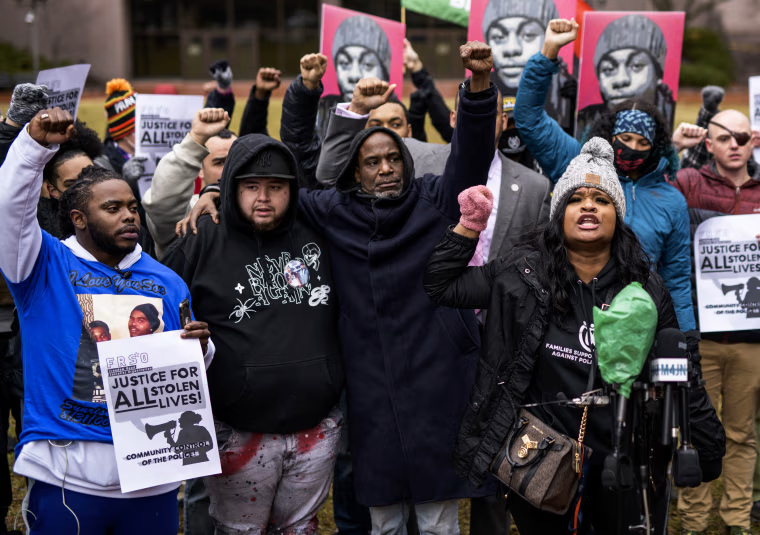
Unlike in those cases, the public outcry following Good’s death has centered on the expanding role of federal immigration enforcement, sparking questions about ICE’s tactics and its use of force in residential neighborhoods.
Residents told NBC News that they were already accustomed to ICE activity in the area, which is near a Latino cultural corridor of restaurants and businesses. In recent months, neighborhood watch groups adopted warning systems similar to those used in other cities targeted by immigration enforcement, relying on whistles and car horns to alert others.
Ginya said the heightened enforcement has reshaped daily life. Since the beginning of the school year, she said, parents have organized car pools so children don’t have to ride the bus, fearing encounters with immigration agents.
“There are parents that stand at four points around the schools with ICE whistles. I took my children to the pediatrician, and my pediatrician was handing out ICE whistles to families,” she said. “So that’s just an indication of the climate that we are living in right now. It’s the saddest thing.”
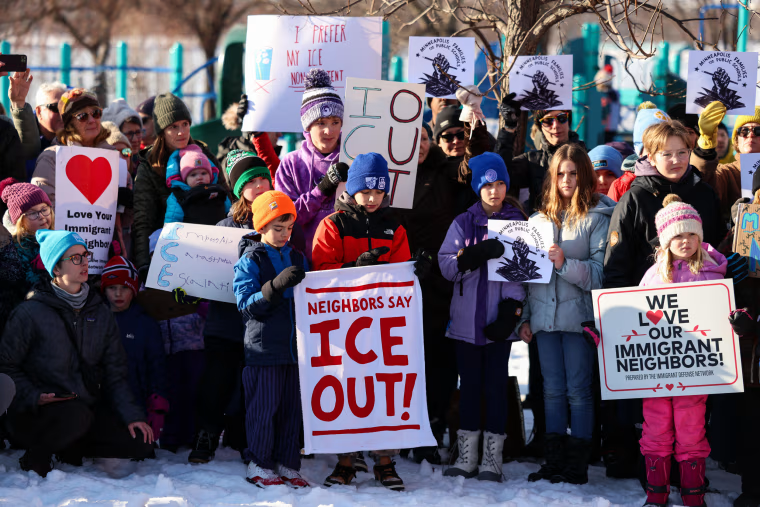
For some, the helicopters flying overhead and the protesters flooding the streets this week felt hauntingly familiar.
“It really felt like post-George Floyd,” said Caroline, 46, who asked that her last name not be used for safety reasons. “It’s been a rough year.”
She pointed to the killings in June of Minnesota state lawmaker Melissa Hortman and her husband, Mark, in what authorities describe as politically motivated shootings.
“I feel like our federal government is trying to attack and destroy Minnesota,” she said. “That’s where I keep coming back to, how amazing this community is. We aren’t going to fall, but it is hard.”
Daniella Silva reported from Minneapolis and Nicole Acevedo from New York.

