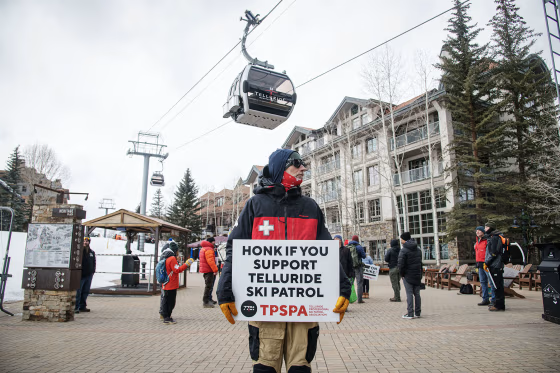
Tony Daranyi has worked as a ski patroller in Telluride, Colorado, for 27 years. He’s a certified EMT with advanced training in forecasting avalanches and using explosives to mitigate them. He works in extreme weather and puts his safety on the line each day.
For that, he said, he’s paid about $32 an hour, on par with most other seasoned ski patrollers; newer patrollers make $21 an hour. Those wages, Daranyi says, aren’t enough to live on in one of the most expensive housing markets in America, prompting him and his fellow ski patrollers at the Telluride Ski Resort to go on strike Dec. 27 — a move that shut down the resort during the busy holiday season.
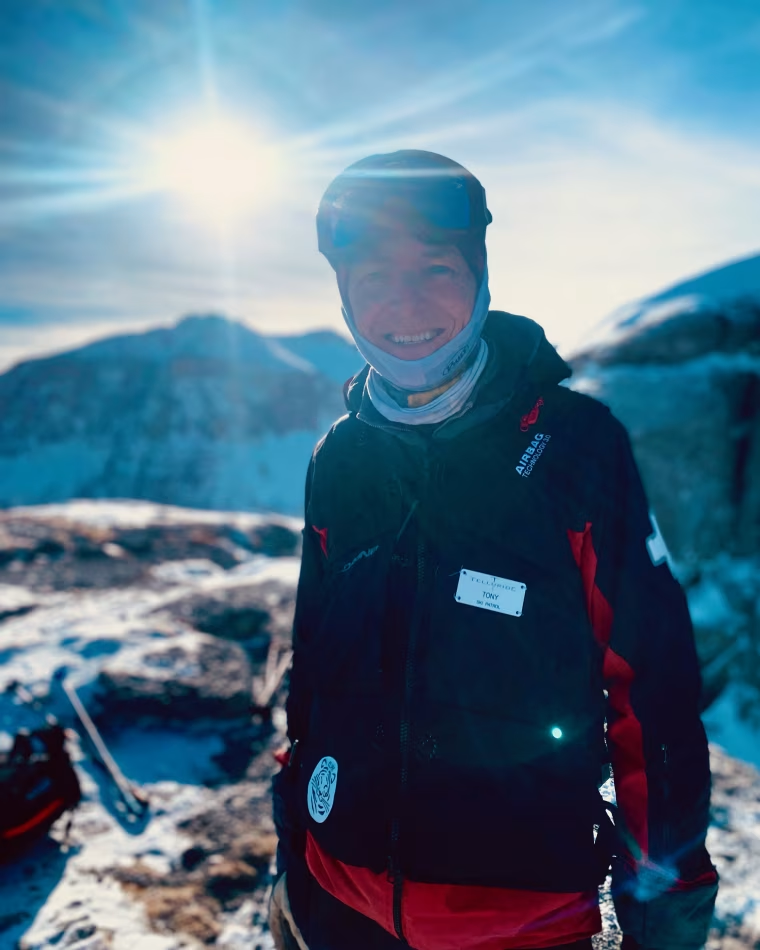
Ski patrollers in mountain towns across the West are increasingly leading the push for higher wages in communities hit hard by rising cost of living. A year ago, ski patrollers in Park City, Utah, went on strike, which caused the resort to close most of its terrain for nearly two weeks, drawing backlash from visitors. Ski patrollers at Jackson Hole Mountain Resort in Wyoming filed a petition last fall with the National Labor Relations Board to hold a vote to unionize. A wave of other patrollers have unionized in recent years, including those at Keystone Resort, Eldora Mountain and Arapahoe Basin Ski Area in Colorado. The United Mountain Workers union says it now has about 1,000 members.

 FOR SUBSCRIBERSCBP leaders cut out of Trump ad buy decision









FOR SUBSCRIBERSA harrowing ordeal aboard an Israel-bound plane





FOR SUBSCRIBERSCBP leaders cut out of Trump ad buy decision
FOR SUBSCRIBERSA harrowing ordeal aboard an Israel-bound plane
“Wages haven’t kept up. We’re so far below what it takes somebody in this community to afford either rent or trying to buy even an affordable house,” said Daranyi, a past union president who helped start the Telluride union a decade ago. “This is about more than just the Telluride ski patrol. This is a reflection of what’s going on in all mountain communities, and it’s also a reflection of what’s going on nationwide with income inequality and wealth.”
Surviving on a ski resort salary has long been a struggle, especially in destination towns with some of the world’s most sought-after real estate. But the surge in housing costs in resort communities following the pandemic has pushed workers to a breaking point, ski patrollers said.
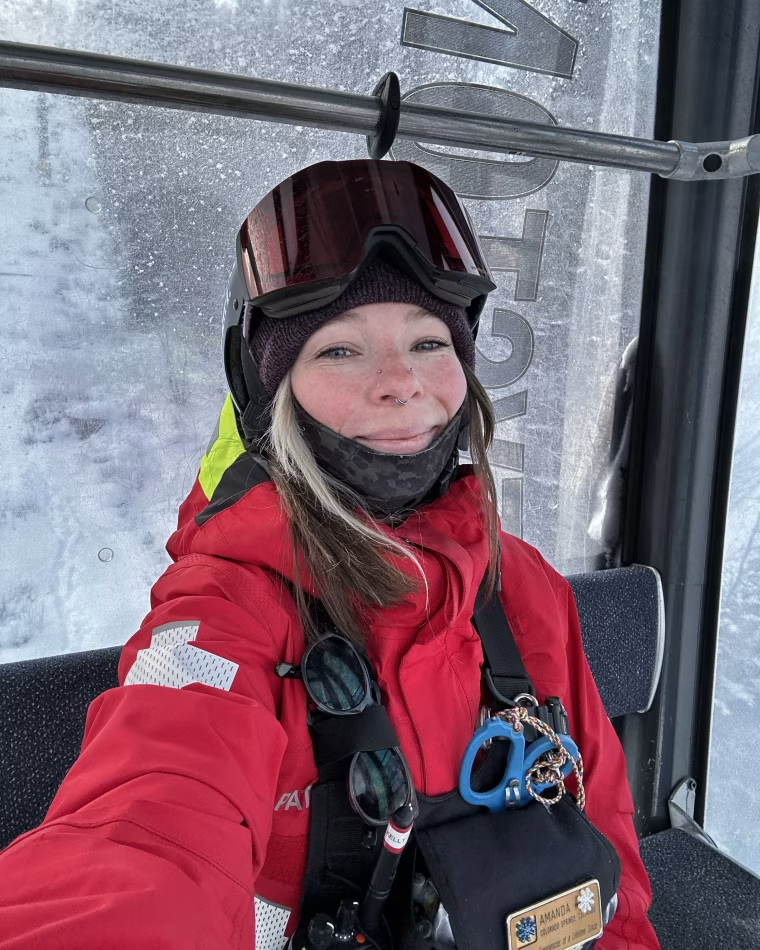
“We are like an ambulance on the ski hill that doesn’t charge anything for our services, and some of us are getting paid barely more than an entry-level position,” said Amanda Kelly, a patroller at Keystone Resort. “We risk our lives and our bodies, and we require a lot of skill to do what we do, and we’re struggling with even just feeding ourselves day to day.”
Home prices in rural vacation communities increased 47% in the three years following the start of the pandemic, compared to a 36% increase in rural areas overall, according to a recent analysis by Harvard University researchers. Vacation communities in the West, such as Telluride and Park City, saw the biggest increase, with home prices up an average of 51%.
The researchers attributed the spike to an influx of remote workers and buyers of second homes, who flocked to rural communities looking for more space, lower housing costs and easy access to outdoor activities. Rural areas saw a population gain of 540,400 from 2021 to 2023, compared to a loss of 77,900 in the three years prior to the pandemic, the Harvard researchers found.
“What we’re seeing in our mountain communities across Colorado is like what we’re seeing across the country on steroids,” said David Seligman, executive director of Towards Justice, a workers' advocacy group, who is running for Colorado attorney general as a Democrat.
Unlike some resort workers, ski patrollers have a level of training that makes them essential to operations and difficult to replace in a strike. They are responsible for ensuring the safety of the guests on the mountain, including administering first aid, rescuing guests stranded on chairlifts or cliffs and preventing unintended avalanches with explosives.
The ski patrollers have argued that their expertise merits the higher pay. The job can also be physically taxing and even deadly. Cole Murphy, a ski patroller at Mammoth Mountain, was killed on the job and a second ski patroller was injured in an avalanche there last month.
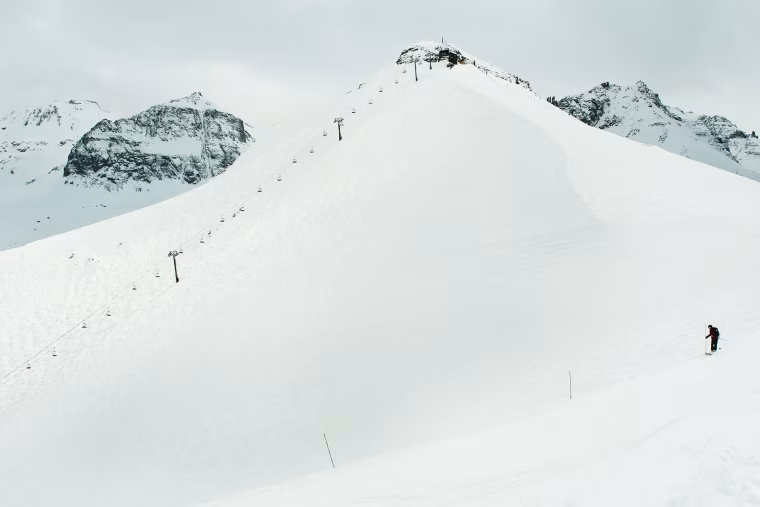
In San Miguel County, where Telluride is located, the average home is valued at $1.5 million, twice as much as it was in 2018, according to data from Zillow. And the average rent in Telluride is $8,000 a month, Zillow shows. While more affordable housing is available farther from the resort, commuting can be a challenge in severe winter weather and comes with added transportation costs, Daranyi said.
Representatives for Telluride and ski patrollers resumed talks over the weekend, but as of Tuesday had yet to reach a deal on the union’s contract, which expired over the summer. After closing for nine days, the resort opened one ski lift and the children’s ski area Monday.
A Telluride spokesperson didn’t respond to a request for comment. The latest update on the resort’s website said that “on January 3, Telluride had a productive and collaborative meeting with the Ski Patrol Union and we have revised our last offer, in an attempt to bridge the gap.”
The resort's longtime owner, Chuck Horning, said in an email to local businesses that the resort will be forced to raise prices if the union gets its wage increase, according to media reports. A day pass to ski at Telluride currently costs around $245 for an adult, with an adult season pass running $2,200. Horning, a California entrepreneur and investor, has had an increasingly contentious relationship with the city of Telluride.
The union has been seeking median pay of $25.50 for new ski patrollers, up from the current $21.50, and $36 an hour for advanced ski patrollers, up from around $30 currently, according to the last proposal the union said it submitted before the strike.
The union said it had previously sought higher wages along with a $60 weekly health care stipend, since patrollers aren’t offered health insurance coverage, and additional money for equipment, but dropped those requests during earlier negotiations.
The resort said it has offered an average 13% wage increase for ski patrollers for this season and a 5% cost of living increase for the following two seasons. The ski patrollers union nearly unanimously rejected that offer.
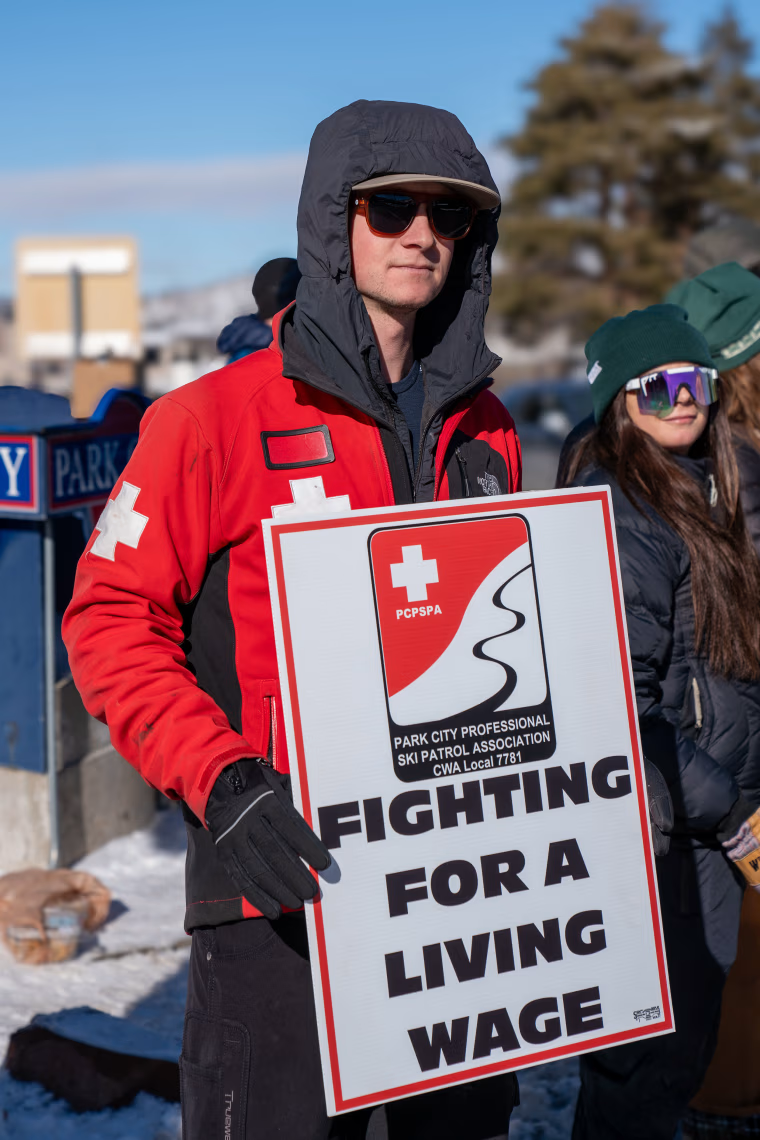
Last year, a strike by ski patrollers at Park City Mountain Resort in Utah shut down most of the resort for 12 days. The two sides eventually reached an agreement, with the average ski patroller getting a $4-an-hour raise, according to the union.
Corlan Williamson, a ski patroller in Park City, said he now sees a longer-term future in the job. When he started working there five seasons ago, he was making $13.25 an hour, but is now up to around $30 an hour.
“It’s been a pretty big change for people, and definitely a sigh of relief,” said Williamson, who works as a lead specialist, responsible for the safety of a section of the mountain and supervising other patrollers. “The job requires a lot of skill and a lot of knowledge, and we were getting to a point where we were losing our experience. We’ve been able to build up that experience and knowledge again and retain people.”
Still, the job comes with economic uncertainty. Ski patrollers’ start and end dates can vary depending on the weather. This season, with less than average snowfall throughout Colorado and Utah, some patrollers who were planning to start in late November still haven’t been hired.
Health insurance is another variable. Some places, like those owned by Vail Resorts, the world’s largest ski resort operator, offer health insurance while ski patrollers are employed, but not in the offseason. Others, like Telluride, provide none.
“We still have some progress to be made, but the direction we’re moving in has made it feel a lot more realistic and possible for this to be a career,” Williamson said. “It’s not going to be the same life and the luxury that I would have if I was still an engineer in the oil and gas world, but I think there’s a lot of value, and it’s just a very rewarding career.”
At Keystone, Kelly said she thinks the strike in Park City helped pave the way for her union to secure its first contract a month later. Both Park City and Keystone are owned by Vail Resorts, which also has a partnership with Telluride.
Vail declined to comment on contract negotiations. In 2022, Vail increased its average hourly pay for its North American employees by 30%, including setting a $20 minimum wage.
Kelly said she hopes the push by ski patrollers can further lift the wages for other workers at the Keystone resort.
“I don’t think that ticket scanners or lift operators should struggle any more than we should just to get by,” she said. “It’s just become so unfeasible. I started working in Keystone in 2013 and it’s just gotten harder and harder.”
CORRECTION (Jan. 9, 2026, 8:40 a.m. ET): A previous version of this article misstated the status of the Jackson Hole ski patrollers’ unionization efforts. The ski patrollers filed a petition last fall with the National Labor Relations Board to hold a vote to unionize; they have not yet held the vote itself.
