It's the case of the smelly washing machines.
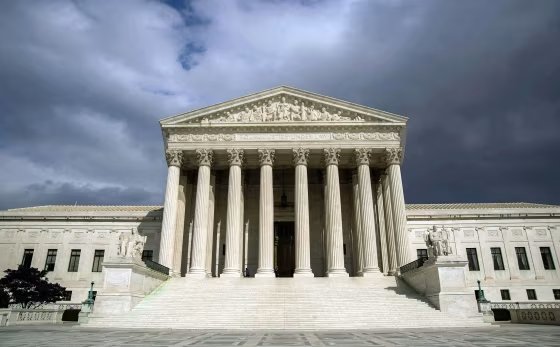
The U.S. Supreme Court on Monday rejected an appeal from the makers of front-loading clothes washers who face class-action lawsuits, involving potentially millions of customers, that claim a design flaw causes a musty odor.
The legal issue was whether the claims of consumers are similar enough to justify a class action, consolidating all the individual lawsuits into one massive case. Now that the Supreme Court has declined to weigh in, lawyers for consumers can continue pursuing their suits in the lower courts.

 FOR SUBSCRIBERSCBP leaders cut out of Trump ad buy decision









FOR SUBSCRIBERSA harrowing ordeal aboard an Israel-bound plane





Revised federal standards require manufacturers to make clothes washers and dryers that use less water and electricity, and the industry responded with front-loading washers that use far less water than older top-loading models.
But the front-loaders have a problem: They can develop an odor that's hard to remove. In courts around the nation, consumers have been suing the makers — Sears and its Whirlpool subsidiary, along with German company BSH.
FOR SUBSCRIBERSCBP leaders cut out of Trump ad buy decision
FOR SUBSCRIBERSA harrowing ordeal aboard an Israel-bound plane
The companies say only a tiny proportion of owners reported mold or odors and that the designs of the machines, as well as the instructions and disclosures given to owners, differed across the models at issue.
They also say buyers treated their washers in materially different ways, with large variations in how they followed instructions on preventing the odors from building up.
Allowing a class-action lawsuit based on such variations among the experiences of consumers "would heavily influence dozens of cases still in the lower courts and pressure the entire industry into black-mail settlements unrelated to the merits," argued a lawyer for the washing machine companies.