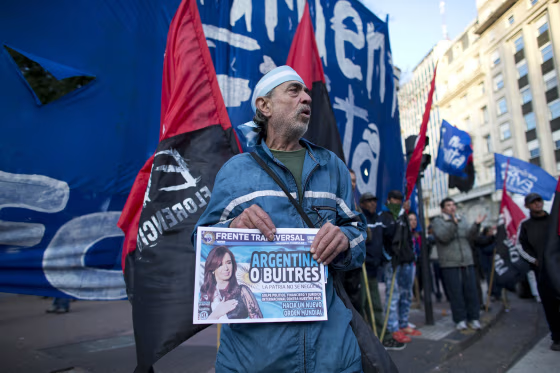
Argentina faces its second default in more than 12 years after talks with holdout creditors failed on Wednesday. The country's economy minister, Axel Kicillof, repeatedly referred to the holdout hedge funds as "vultures" after two days of talks failed to produce an agreement. Court-appointed mediator Daniel Pollack said the failure triggered an imminent default that, among other things, would hurt the Argentine economy as well as bondholders who were not part of the dispute. "The full consequences of default are not predictable, but they are certainly not positive," Pollack said.

 FOR SUBSCRIBERSCBP leaders cut out of Trump ad buy decision









FOR SUBSCRIBERSA harrowing ordeal aboard an Israel-bound plane





FOR SUBSCRIBERSCBP leaders cut out of Trump ad buy decision
FOR SUBSCRIBERSA harrowing ordeal aboard an Israel-bound plane
The default results from Argentina's failure to comply with a court order that holdout bondholders be paid at the same time as a $539 million payment to those who accepted reduced payments in two prior restructurings. The default is expected to worsen an economy already in recession, weaken the currency as more Argentines seek to hold dollars, and put pressure on foreign reserves. It could also raise soybean prices, as the country is the world's third-largest soybean exporter.