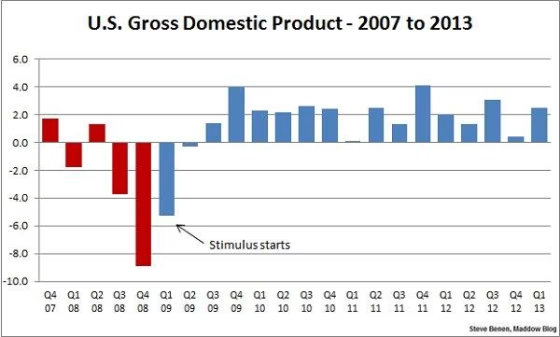
At first blush, one might look at the new report on the strength of the U.S. economy and consider it good news. After all, the economy is, in fact, growing, and it expanded in the first quarter of 2013 at a much faster pace than the last three months of 2012. Overall, the nation has seen 14 consecutive quarters of economic growth, starting in mid-2009, when President Obama's Recovery Act helped put the nation on stronger footing.
But the closer one looks at the details, the more discouraging the new figures appear.
The U.S. economy expanded at a 2.5% pace in the first three months of 2013, up from 0.4% in the fourth quarter, as consumer spending rose at the fastest rate in two years and businesses restocked warehouse shelves. Yet government spending fell sharply again and imports surged to act as drags on economic growth, according to data released Friday by the Commerce Department. Economists surveyed by MarketWatch had forecast growth to rise to 3.2%, so the less-than-expected number could weigh on U.S. markets.
It will take some time to dig through the data, and it's worth keeping in mind that these are preliminary results that will be revised twice in the next two months. The last GDP report, for example, was revised quite a bit in an encouraging direction.
That said, we can draw some tenuous conclusions based on the top-line data -- consumer spending looked quite good in the first quarter, and private-sector investment was fine. So what's behind the tepid growth? It appears the strength of the recovery was once again dragged down by government spending cuts.
Specifically, government spending cuts dragged down GDP by 0.8%. That may not sound like much, but it's actually enormous -- today's report would have shown economic growth of 3.3% instead of 2.5% had it not been for these cuts.

 FOR SUBSCRIBERSCBP leaders cut out of Trump ad buy decision









FOR SUBSCRIBERSA harrowing ordeal aboard an Israel-bound plane





I know this makes congressional Republicans and much of the Beltway establishment uncomfortable, but if we want more economic growth, we'll need to stop making sharp cuts to government investments. It's the one part of economic policy that's easiest to control -- policymakers can simply choose to invest more, grow the economy, and create jobs -- if only the political will existed.
FOR SUBSCRIBERSCBP leaders cut out of Trump ad buy decision
FOR SUBSCRIBERSA harrowing ordeal aboard an Israel-bound plane
Instead, we see Republican policymakers continues to insist, even now, that the nation will benefit if Congress slashed public investments even further and took additional capital out of the economy. Indeed, sequestration cuts will continue -- even though they're hurting the country -- because conservative lawmakers consider the cuts a "victory."
As for the image above, the chart shows GDP numbers by quarter since the Great Recession began. The red columns show the economy under the Bush administration; the blue columns show the economy under the Obama administration.