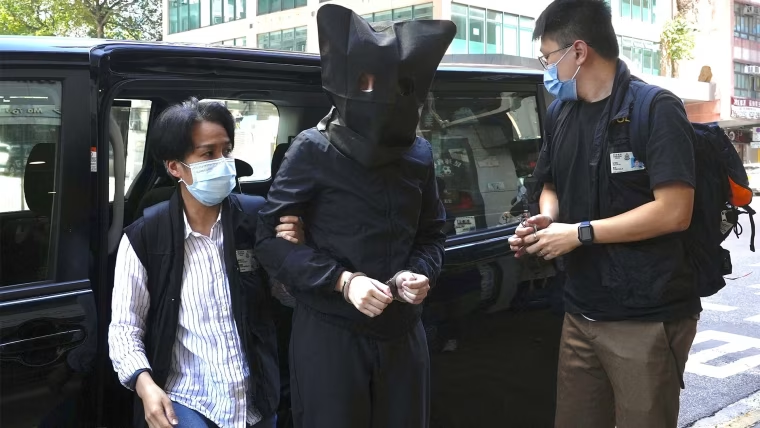
A pro-democracy protester was sentenced Friday to nine years in prison in the closely watched first case under Hong Kong’s national security law as Beijing tightens control over the territory.
Tong Ying-kit, 24, was convicted of inciting secession and terrorism for driving his motorcycle into a group of police officers at a July 2020 rally.
He carried a flag bearing the banned slogan, “Liberate Hong Kong, revolution of our times.”
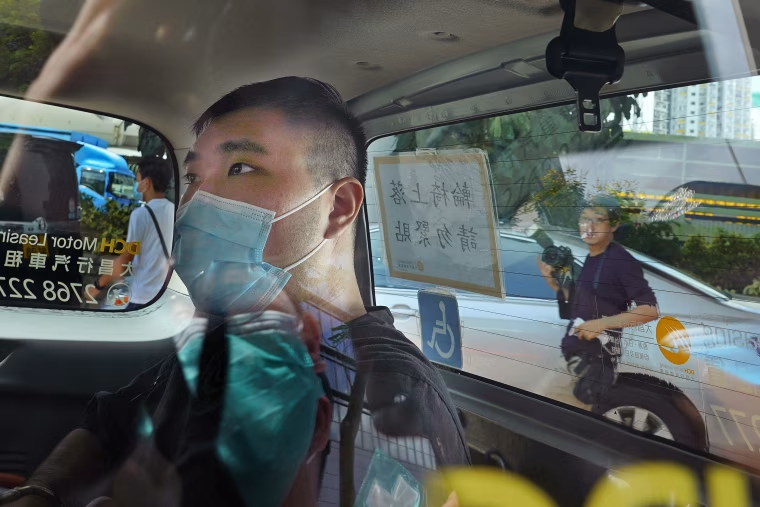
Beijing imposed the security law on the former British colony last year following anti-government protests that erupted in mid-2019.
The sentence was markedly longer than the three years requested by the prosecution. Tong's defense lawyers appealed for no more than 10. He faced a possible maximum of life in prison.
Critics accuse Beijing of violating the autonomy and Western-style civil liberties promised when Hong Kong returned to China in 1997, and hurting its status as a trading and financial center.







 FOR SUBSCRIBERSA harrowing ordeal aboard an Israel-bound plane






FOR SUBSCRIBERSThe debate over AI’s future rages on both coasts
FOR SUBSCRIBERSA harrowing ordeal aboard an Israel-bound plane
FOR SUBSCRIBERSThe debate over AI’s future rages on both coasts
The ruling Communist Party rejects the criticism and says Beijing is restoring order and instituting security protections like those of other countries. More than 100 people have been arrested under the security law.
Defense lawyers said Tong’s penalty should be light because the three-judge panel hadn’t found the attack was deliberate, no one was injured and the secession-related offense qualified as minor under the law.
Download the NBC News app for breaking news and politics
On Friday, Tong was dressed in a black shirt and tie with a blue blazer as he was throughout his trial.
The three-judge panel ruled Tuesday that Tong’s actions were an act of violence aimed at coercing the Hong Kong and mainland governments and intimidating the public. It said carrying the flag was an act of incitement to secession, rejecting defense arguments that Tong could be proven to be inciting secession just by using the slogan.
Tong’s trial was conducted without a jury under rules that allow an exception to Hong Kong’s British-style common law system if state secrets need to be protected or foreign forces are involved. The judges were picked by Hong Kong Chief Executive Carrie Lam.
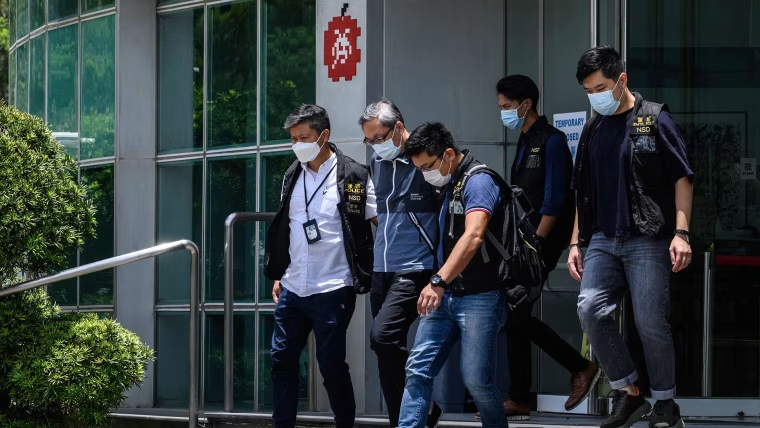
The last pro-democracy Hong Kong newspaper, Apple Daily, shut down last month after journalists and executives were arrested. Its owner, Jimmy Lai, is serving a 20-month prison term and faces more charges of colluding with foreigners to endanger national security.
Also last year, Hong Kong’s legislature was rearranged to reduce the public's role in picking lawmakers and guarantee a majority to Beijing-allied figures. Rules for elected officials were tightened to require them to be deemed patriotic.
