The facts are still coming together following last night's collapse of a bridge near Mount Vernon, about 60 miles north of Seattle, though given what we know, it's not too soon to note how remarkable it is that no one was killed.
Without more information, clearly it's best to wait before pointing fingers. That said, in terms of some of the details that seem especially relevant today, let's not forget that on the state's list of structurally deficient bridges, the Skagit River Bridge was deemed "functionally obsolete" in 2000. It was built in 1955, and in an inspection last year, was given a sufficiency rating of just 57.4 out of 100.
That sounds bad, of course, but there are 759 bridges in the state of Washington that have a lower sufficiency score.
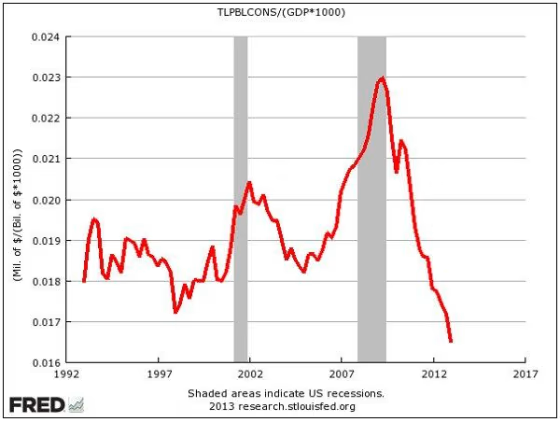
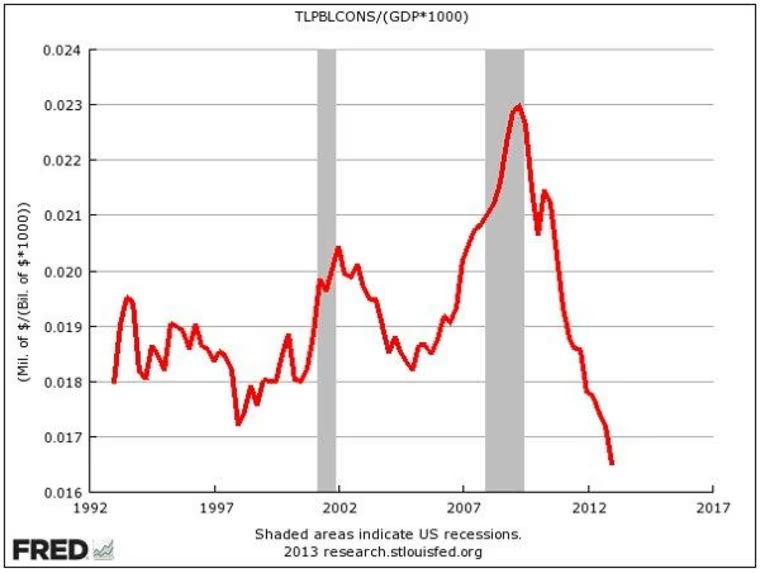
And with this in mind, while we wait for more details from the area, it's not to soon to talk about the larger value of infrastructure investments. Joe Weisenthal posted this chart showing public construction spending reaching a 20-year low as a percentage of the overall economy.
I feel like I could write the same post every day, but let's just go ahead and review the basics: we have high unemployment, the need for economic stimulus, the ability to borrow at incredibly low rates, and systemic infrastructure needs -- needs that will only grow more acute as time progresses. Indeed, it costs us more, not less, by waiting to tackle these projects that are going to have to be tackled eventually anyway.
There's an assumption among many in Congress that all public investments are necessarily bad investments because, you know, "government spending" is bad. The sooner policymakers are more responsible, the better.