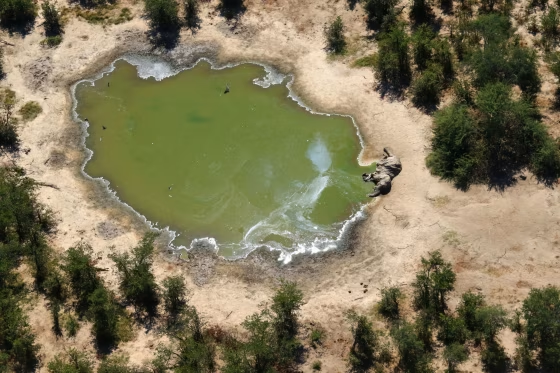
GABORONE — The deaths of hundreds of elephants in Botswana this year which had baffled and alarmed conservationists were caused by toxins from algae, officials said on Monday.
Cyril Taolo, deputy director of the Department of Wildlife and National Parks, told a news conference that the number of dead elephants had risen to 330, from 281 last reported in July.

Laboratory test results suggest toxins produced by cyanobacteria — also called blue-green algae — in water are to blame, officials announced.
The elephant carcasses that first detected in May were found in the Okavango Delta, a wetland near the Namibian border.
The department’s principal veterinary officer Mmadi Reuben told the same conference that there were, however, still many unanswered questions.
“Our latest tests have detected cyanobacterial neurotoxins to be the cause of deaths. These are bacteria found in water,” Reuben said.
“However we have many questions still to be answered such as why the elephants only (died) and why that area only. We have a number of hypotheses we are investigating.”







 FOR SUBSCRIBERSA harrowing ordeal aboard an Israel-bound plane







FOR SUBSCRIBERSThe debate over AI’s future rages on both coasts

Download the NBC News app for breaking news and politics
FOR SUBSCRIBERSA harrowing ordeal aboard an Israel-bound plane
FOR SUBSCRIBERSThe debate over AI’s future rages on both coasts
In neighboring Zimbabwe, more than 20 elephant carcasses were discovered near the country’s biggest game park and authorities suspect they succumbed to a bacterial infection.
Africa’s overall elephant population is declining due to poaching but Botswana, home to almost a third of the continent’s elephants, has seen numbers grow to around 130,000.

