As the bone chilling “polar vortex” continues to freeze America to its core, in Australia things could not be more different as the sweltering temperatures that made 2013 the hottest year on record continue to blast the country.
The highest temperature recorded so far this year has been 125 degrees Fahrenheit in Moomba, South Australia, on Jan. 2. While in Sydney on Monday temperatures were a sweltering 96 degrees.
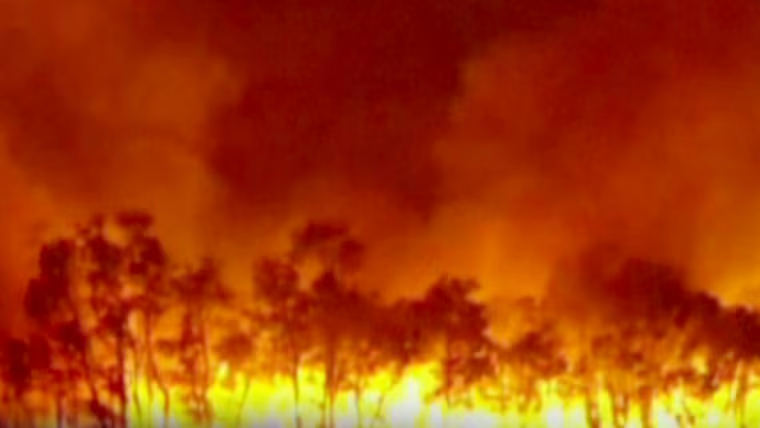
While less extensive and prolonged than the record breaking hot spell that opened 2013, the country’s Bureau of Meteorology called the latest heat wave a “remarkable event” in a statement Monday.
The report comes just days after the bureau confirmed last year was Australia’s hottest in more than a century of records, easily breaking the previous record set in 2005 by 32.3 degrees Fahrenheit.

 FOR SUBSCRIBERSCBP leaders cut out of Trump ad buy decision









FOR SUBSCRIBERSA harrowing ordeal aboard an Israel-bound plane





“[2013] started with a persistent heatwave in January, with Australia recording its hottest day (7 January), hottest week, and hottest month on record,” the Bureau of Meteorology said in a statement.
FOR SUBSCRIBERSCBP leaders cut out of Trump ad buy decision
FOR SUBSCRIBERSA harrowing ordeal aboard an Israel-bound plane
“A new record was set for the number of consecutive days the national average temperature exceeded 39°C (102 degrees Fahrenheit) - seven days between 2 and 8 January 2013, almost doubling the previous record of four consecutive days in 1973,” they added.
The current hot weather has prompted them to issue "severe fire" warnings in the states of Queensland and Western Australia prompting fears of a repeat of the huge wildfires that affected parts of the country in October.