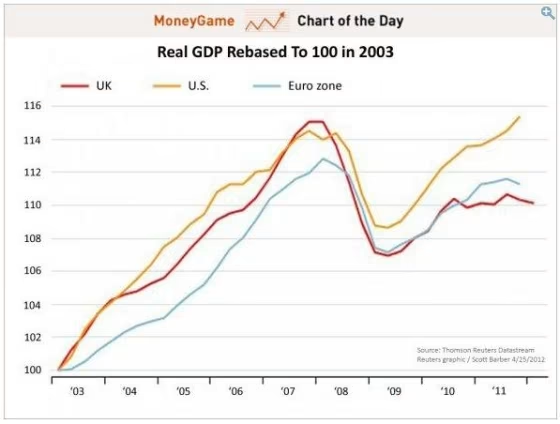
Joe Weisenthal published a pretty remarkable chart today, created by Reuters' Scotty Barber, noting economic growth in the United States, United Kingdom, and Europe over the last nine years (via Ezra Klein). It's the kind of image that should, if our political discourse tolerated just a little more wonkiness, dominate the 2012 debate.
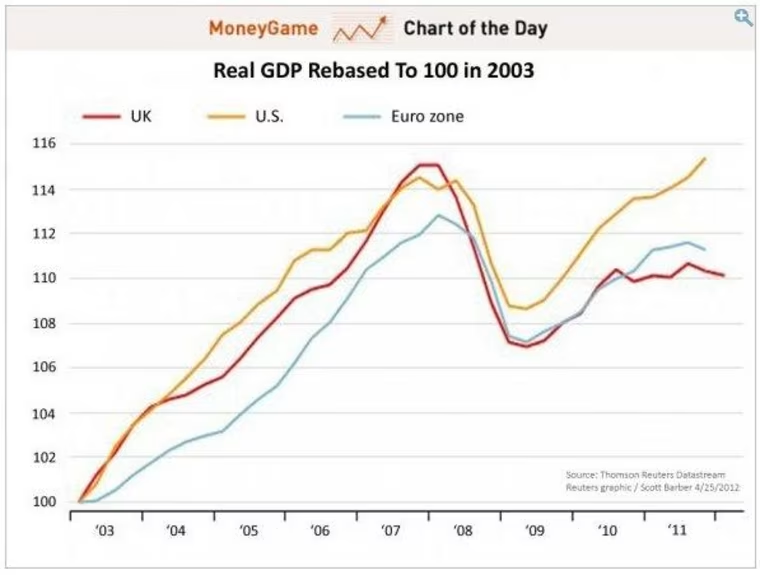
The left half of the image is pretty straightforward -- all three economies grew steadily from 2003 to 2007, then peaked, then crashed in 2008. What matters more, however, is the right half of the image.
















Once President Obama took office and the Recovery Act/stimulus began putting capital back into the economy, the U.S. economy began growing again. In the U.K., the economy started to improve, right up until British officials began implementing an austerity agenda -- at which point the national economy stagnated and slipped back into a recession.
Obama rejected austerity, and as a result, American growth, while fragile and insufficient, is easily outpacing Europe's and UK's, where austerity measures have ruled the day.
Americans should care about this, if for no other reason because of interconnectivity of the modern global economy. But there's also a purely political perspective to keep in mind: namely, the problem of Republican predictions.
In short, American conservatives got everything backwards. When Obama's policies began, Republicans said they wouldn't generate economic growth, but GOP officials got it backwards. When David Cameron's austerity policies began, Republicans were not only certain they would work, they pleaded with American policymakers to follow the Tories' lead.
And we now know GOP officials had this backwards, too.
The remarkable thing is, Republicans aren't the least bit chastened by their track record of failure.
They said Clinton's economic policies would fail miserably, but that's not what happened. They said Bush's economic policies would produce extraordinary prosperity, but that's not what happened. They said Obama's economic policies would make the Great Recession worse, but that's not what happened. They said Cameron's economic policies in the U.K. would work brilliantly, but that's not what happened.
And now these same Republicans are saying they deserve Americans' votes in 2012 because they have credibility on the economy.
It's a strange argument, predicated on widespread amnesia.