The 113th Congress remains on track to be arguably the least productive Congress in modern history, according to the best available statistics on legislation that has been enacted into law.
With it about to depart on its five-week August recess, just 142 public bills have become law in this current Congress (2013-2014) – down from the 906 the 80th “Do-Nothing” Congress passed in 1947-48, and the 333 that were enacted during the Newt Gingrich-led 104th Congress of 1995-96.
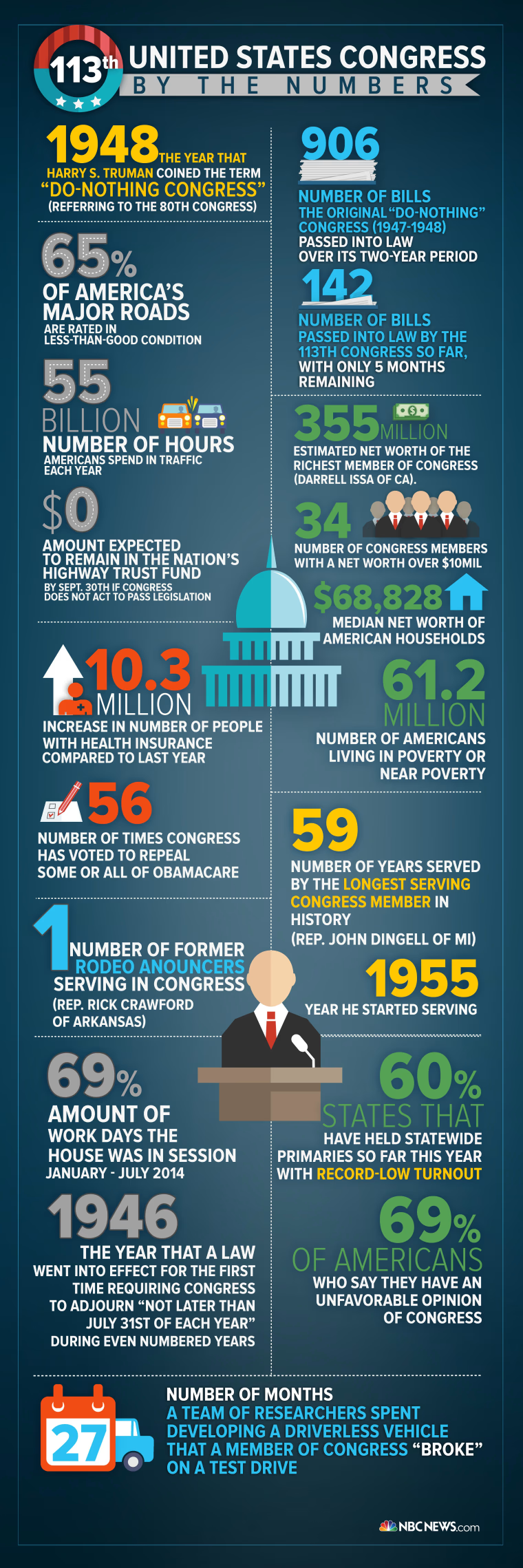
At this same point in the last Congress (2011-2012) – which set the record for fewest bills passed into public law in the modern era – 151 bills had become law.

 FOR SUBSCRIBERSCBP leaders cut out of Trump ad buy decision









FOR SUBSCRIBERSA harrowing ordeal aboard an Israel-bound plane





FOR SUBSCRIBERSCBP leaders cut out of Trump ad buy decision
FOR SUBSCRIBERSA harrowing ordeal aboard an Israel-bound plane
There are two ways to read the statistics below. One, there has been a steady decline in the number of public bills that have become law. Two, the decline in the last two Congresses (the 112th and 113th) has been precipitous. Yes, there has been divided government before (the 104th, the 110th most recently), but the productivity has never been this low before.
A final note: Republicans argue that these statistics aren’t the best way to measure congressional productivity. They say their goal is often to PREVENT bad laws from being enacted. They also contend that the Senate hasn’t taken up measures the GOP-controlled House has passed. Still, here are the numbers:
- 113th Congress (2013-14): 142 public laws (as of July 31, 2014)
- 112th Congress (2011-12): 283 public laws (total)
- At this SAME point in the 112th Congress: 151 (as of July 30, 2012)
- 111th Congress (2009-10): 383
- 110th Congress (2007-2008): 460
- 109th Congress (2005-2006): 482
- 108th Congress (2003-2004): 498
- 107th (2001-2002) : 377
- 106th (1999-2000): 580
- 105th (1997-98): 394
- 104th (1995-96): 333
- 103rd (1993-94): 465
- 102nd (1991-92): 590
- 101st (1989-90): 650
- 100th (1987-88): 713
- 99th (1985-86): 663
- 98th (1983-84): 623
- 97th (1981-82): 473
- 96th (1979-80): 613
- 95th (1977-78): 633
- 94th (1975-76): 588
- 93rd (1973-74): 649
- 92nd (1971-72): 607
- 91st (1969-70): 695
- 90th (1967-68): 640
- 89th (1965-66): 810
- 88th (1963-64): 666
- 87th (1961-62): 885
- 86th (1959-60): 800
- 85th (1957-58): 936
- 84th (1955-56): 1,028
- 83rd (1953-54): 781
- 82nd (1951-52): 594
- 81st (1949-50): 921
- 80th (1947-48): 906
SOURCES: Library of Congress, Vital Statistics on Congress