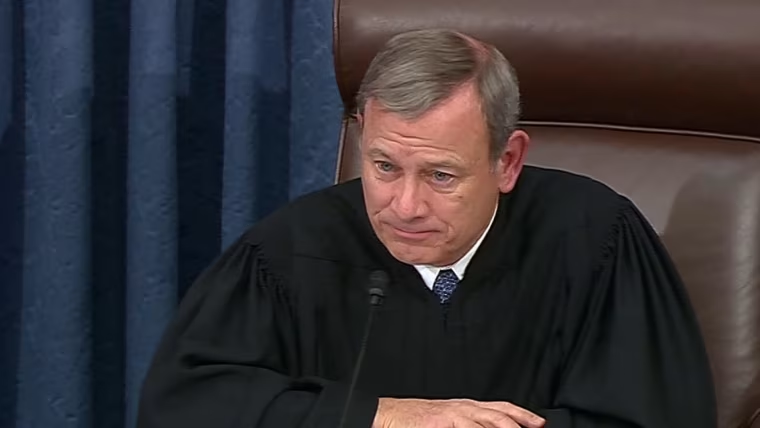
WASHINGTON — Chief Justice John Roberts said Friday it would be "inappropriate" for him to break any 50-50 tie votes during the Trump impeachment trial.
His brief explanation resolved any lingering questions about the issue and appeared to set a precedent against tie-breaking votes for future impeachment proceedings.
The prospect of a possible tie on the vote to call Senate witnesses produced speculation that Roberts might break a 50-50 tie. Some commentators even urged him to do so. Senate rules are silent on the issue, and the strongest evidence that he had such a power was the fact that the chief justice did so twice during the impeachment trial of Andrew Johnson in 1868.







 FOR SUBSCRIBERSA harrowing ordeal aboard an Israel-bound plane







FOR SUBSCRIBERSThe debate over AI’s future rages on both coasts

Asked Friday night in a parliamentary inquiry from Senate Minority Leader Chuck Schumer, D-N.Y., whether Roberts was aware of those votes by Chief Justice Salmon Chase, Roberts said he was.
"One concerned a motion to adjourn, the other concerned a motion to close deliberations. I do not regard those isolated episodes 150 years ago as sufficient to support a general authority to break ties," he said.
FOR SUBSCRIBERSA harrowing ordeal aboard an Israel-bound plane
FOR SUBSCRIBERSThe debate over AI’s future rages on both coasts
But Roberts went further to say that a chief justice should not do so, whether or not any such authority existed.
"If the members of this body, elected by the people and accountable to them, divide equally on a motion, the normal rule is that the motion fails. I think it would be inappropriate for me, an unelected official from a different branch of government, to assert the power to change that result so that the motion would succeed."
As it turned out, the vote on calling witnesses was 51 to 49.
