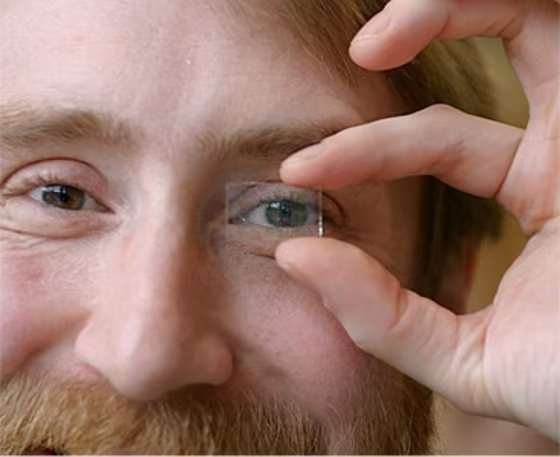
A breakthrough in the chemical formula used to make organic solar cells could turn ordinary windows on the sides of homes and buildings into mini-power plants capable of producing enough electricity to run lights, gadgets, and appliances.
The photovoltaic cells contain organic molecules that harvest infrared light while allowing visible light to pass through. Previous attempts to create transparent solar cells have either had low efficiency — converting less than 1 percent of incoming solar radiation to electricity — or blocked too much visible light, according to the team developing the new cells.
The new prototype organic photovoltaics created at the Center for Excitronics at the Massachusetts Institute of Technology have an efficiency of 1.7 percent while allowing more than 55 percent of the visible light through, according to a paper accepted for publication in Applied Physics Letters.
Efficiency gains?
Further development of the technology — optimizing the composition and configuration of the photovoltaic materials — may lead to efficiency of 12 percent, making it comparable to existing solar cells, the researchers note.
Richard Lunt, a postdoctoral researcher in the Research Laboratory of Electronics, and lab director Vladimir Bulovic, say the transparent solar cells could eliminate many of the costs associated with the manufacturing and installation of thin-film solar power systems.
For example, in new construction the solar cell material can be added to the window glass before they leave the factory. Existing double-pane windows can be coated with the material. Only wiring connections to the window and a voltage controller would be needed to complete a home system.
Part of the family

 FOR SUBSCRIBERSCBP leaders cut out of Trump ad buy decision









FOR SUBSCRIBERSA harrowing ordeal aboard an Israel-bound plane





FOR SUBSCRIBERSCBP leaders cut out of Trump ad buy decision
FOR SUBSCRIBERSA harrowing ordeal aboard an Israel-bound plane
The transparent cell technology is "attractive, because it can be added to things already being deployed," Bulovic said in a press release. Using them could help combat greenhouse gas emissions, but would be just one of the wedges that scientists say are needed to avoid dangerous climate change.
The researchers don't yet have a final cost for the material, though think it could become a commercial product within a decade. Hurdles to its development include achieving the efficiency gains that seem plausible in the lab and extending the lifetime of organic PV cells.
If all goes according to plan, though, any building with sun-facing windows could be fair game, significantly boosting available surface area for generating solar power. Think skyscrapers, for example, glistening in the morning or evening sun.
The windows could even help power vertical farms that some experts are pitching to feed a growing population on a planet with finite arable land.
More stories on solar cell research:
- Solar power future for glass pyramids?
- Solar panels too pricey? Try printing them out
- Stretchy solar cells to power e-skin
- Scientists develop self-healing solar cells
- New solar panel design traps more light
John Roach is a contributing writer for msnbc.com. Connect with the Cosmic Log community by hitting the "like" button on the Cosmic Log Facebook page or following msnbc.com's science editor, Alan Boyle, on Twitter (@b0yle).