Smithsonian scientists have discovered the fossils of a new species of river dolphin that lived more than 5.8 million years ago.

Named Isthminia panamensis, the ancient mammal might have measured more than nine feet in length. Modern river dolphins have broader flippers than their saltwater cousins, as well as more flexible necks and longer snouts, which help them hunt in silty water.
Researchers are particularly interested in river dolphins because they are so rare. Today, only four species are alive, and all of them are endangered. (One of them, the Chinese river dolphin, is considered "functionally extinct.")
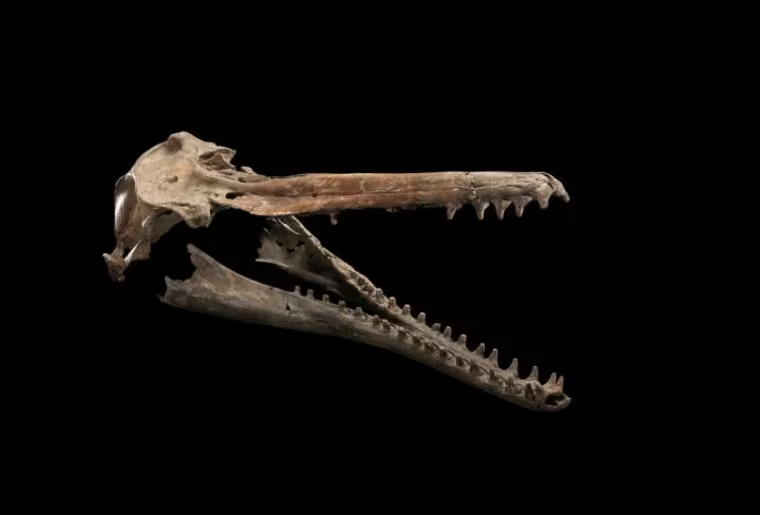
The fossils -- which consist of half a skull, a right shoulder blade, two small flipper bones, and a lower jaw with teeth -- were discovered on the coast of Piña, Panama.
The Smithsonian scientists who discovered them published their results Tuesday in the journal PeerJ. They hope the discovery sheds some light on when these dolphins abandoned the ocean for rivers.

"While whales and dolphins long ago evolved from terrestrial ancestors to fully marine mammals, river dolphins represent a reverse movement by returning inland to freshwater ecosystems," said study co-author Aaron O'Dea in a statement. "As such, fossil specimens may tell stories not just of the evolution [of] these aquatic animals, but also of the changing geographies and ecosystems of the past."
