The United States is in for another long, cold winter, according to the newest edition of the Farmers' Almanac. But before you get out your snow shovel and fuzzy mittens, keep reading. Expert meteorologists say the nearly 200-year-old publication's foreboding forecast may be mistaken.

 FOR SUBSCRIBERSCBP leaders cut out of Trump ad buy decision









FOR SUBSCRIBERSA harrowing ordeal aboard an Israel-bound plane





The 2015 edition of the Farmers' Almanac hit shelves Aug. 25, and its contents aren't heartwarming for the winter-weary. This winter will see "below-normal temperatures for about three-quarters of the nation," the Almanac reads. The new winter outlook also predicts that the Northern Plains and the Great Lakes regions of the U.S. will be hardest hit. A snowy winter is predicted for the eastern coastal part of the country, as well as the Central and Southern Plains.
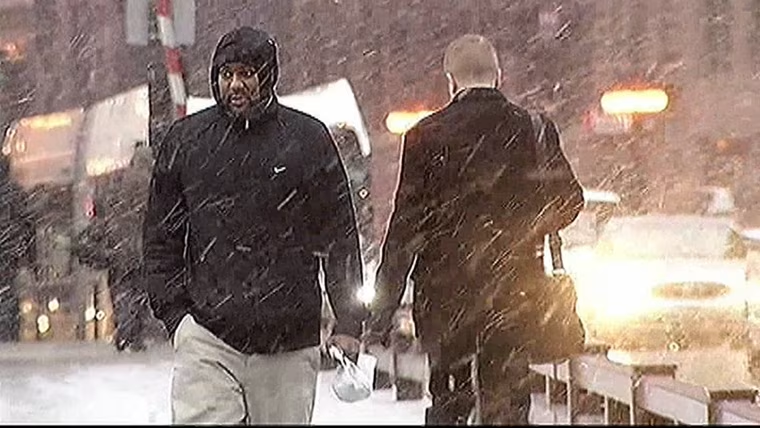
But these forecasts could be wrong, according to Anthony Artusa, a meteorologist with the National Oceanic and Atmospheric Administration's (NOAA) Climate Prediction Center in College Park, Maryland.
While NOAA's official three-month outlook for the coming winter months isn't due out until around mid-October, Artusa said that meteorologists are not seeing the climate conditions that would indicate what the Almanac refers to as a "record breaking winter."
FOR SUBSCRIBERSCBP leaders cut out of Trump ad buy decision
FOR SUBSCRIBERSA harrowing ordeal aboard an Israel-bound plane
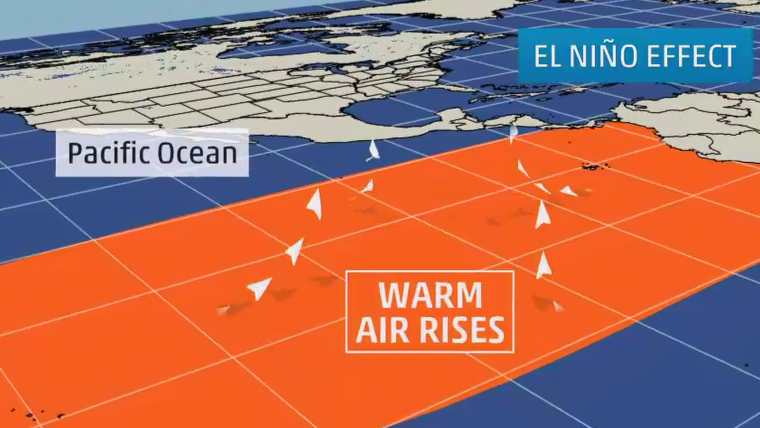
"One of the things that we look for is whether we have an El Niño or La Niña in place," Artusa said. But these complex weather patterns, which result from variations in ocean temperatures in the Pacific Ocean, are not present at the moment, he said.
— Elizabeth Palermo, LiveScience
This is a condensed version of a report from LiveScience. Read the full report here. Follow Elizabeth Palermo @techEpalermo. Follow Live Science @livescience, Facebook & Google+. Original article on Live Science.