DNA testing on tons of ivory seized from traffickers has identified two elephant poaching "hot spots" in Africa in a development scientists hope will spur a crackdown on the illegal trade decimating the population of Earth's largest land animal.

 FOR SUBSCRIBERSCBP leaders cut out of Trump ad buy decision









FOR SUBSCRIBERSA harrowing ordeal aboard an Israel-bound plane





Scientists said on Thursday genetic tests on 28 large ivory seizures, each more than half a ton, pinpointed the geographic origin of the tusks from the two types of African elephant, the savanna elephant and the somewhat smaller forest elephant.
"We were very, very surprised to find that over the last decade almost all of these seizures came from just two places in Africa," said University of Washington biologist Samuel Wasser, whose study appears in the journal Science.
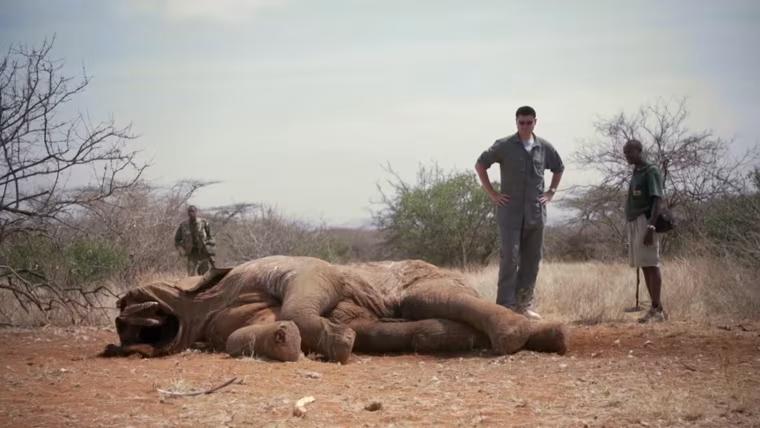
Using dung, hair and tissue samples from elephants across the continent, the scientists devised a map showing where various populations lived based on DNA traits. They extracted DNA from seized ivory and identified the location where elephants with matching DNA live.
Read More: Conservationists Ask Chinese President to End Ivory Trade
FOR SUBSCRIBERSCBP leaders cut out of Trump ad buy decision
FOR SUBSCRIBERSA harrowing ordeal aboard an Israel-bound plane
Most seized savanna elephant tusks came from a region spanning parts of southeastern Tanzania and northern Mozambique. Most forest elephant tusks came from a region covering parts of northeastern Gabon, northwestern Republic of Congo and southwestern Central African Republic.
"Targeting these areas for law enforcement could stop the largest amount of poaching-related mortality in Africa and choke at the major sources of ivory fueling the criminal networks that allow this transnational organized crime to operate," Wasser said.
