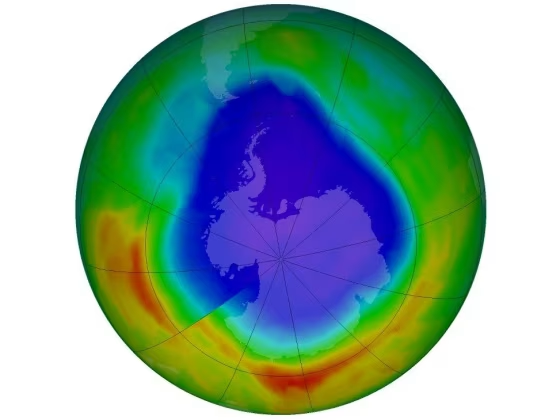
GENEVA — The ozone layer that shields life from the sun's cancer-causing ultraviolet rays is showing its first sign of thickening after years of dangerous depletion, according to a U.N. study released Wednesday. The ozone hole that appears annually over Antarctica has also stopped growing bigger every year, though it will be about a decade before it starts shrinking, said the report co-produced by the World Meteorological Organization and the U.N. Environment Program.







 FOR SUBSCRIBERSA harrowing ordeal aboard an Israel-bound plane







FOR SUBSCRIBERSThe debate over AI’s future rages on both coasts

FOR SUBSCRIBERSA harrowing ordeal aboard an Israel-bound plane
FOR SUBSCRIBERSThe debate over AI’s future rages on both coasts
Past studies have suggested the ozone layer has stopped getting worse. The ozone layer was expected to recover toward its 1980 level by mid-century, or slightly later for Antarctica, where it gets dangerously thin every year between mid-August and November or December.
Experts said the report showed the success of the 1987 Montreal Protocol that banned or phased out man-made gases, including chlorofluorocarbons (CFCs) once widely used in refrigerators and spray cans, that damage the layer. That achievement is expected to help prevent 2 million of cases of skin cancer annually by 2030 and other conditions, such as damage to eyes and immune systems.
IN-DEPTH
- Four New Ozone-Killing Chemicals Detected
- Trees Save More Than 850 Lives a Year: Study
- Despite CFC ban, ozone hole won't heal until 2070, NASA finds