Satellite data from 1994 to 2012 reveals an accelerating decline in Antarctica's massive floating ice shelves, with some shrinking 18 percent, in a development that could hasten the rise in global sea levels, scientists say. The findings, published on Thursday in the journal Science, come amid concern among many scientists about the effects of global climate change on Earth's vast, remote polar regions.
The study relied on 18 years of continuous observations from three European Space Agency satellite missions and covered more than 415,000 square miles (1,075,000 square km). During the study period's first half, to about 2003, the overall volume decline around Antarctica was small, with West Antarctica losses almost balanced out by gains in East Antarctica. After that, western losses accelerated and gains in the east ended. "There has been more and more ice being lost from Antarctica's floating ice shelves," said glaciologist Helen Fricker of the Scripps Institution of Oceanography at the University of California, San Diego.
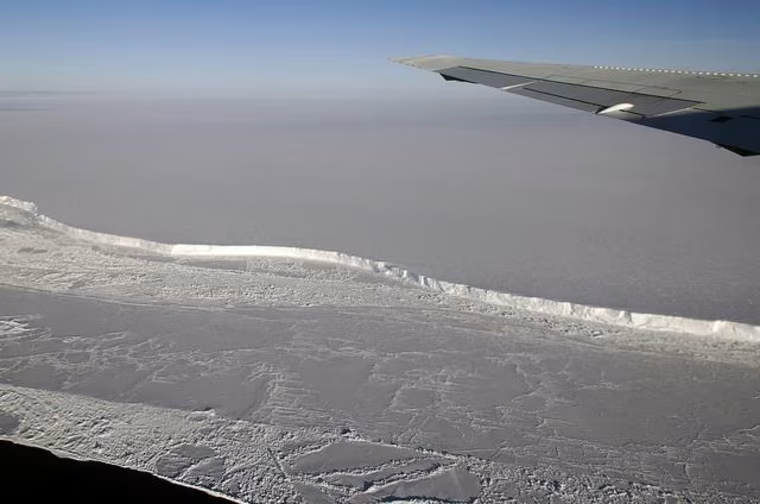
The Crosson Ice Shelf in the Amundsen Sea and the Venable Ice Shelf in the Bellingshausen Sea, both in West Antarctica, each shrank about 18 percent during the study period. "If the loss rates that we observed during the past two decades are sustained, some ice shelves in the Amundsen and Bellingshausen seas could disappear within this century," added Scripps geophysics doctoral candidate Fernando Paolo.
The melting of these ice shelves does not directly affect sea levels because they are already floating. "This is just like your glass of gin and tonic. When the ice cubes melt, the level of liquid in the glass does not rise," Paolo said. But the floating ice shelves provide a restraining force for land-based ice, and their reduction would increase the flow of the ice from the land into the ocean, which would increase sea levels. "While it is fair to say that we're seeing the ice shelves responding to climate change, we don't believe there is enough evidence to directly relate recent ice shelf losses specifically to changes in global temperature," Fricker said.
















IN-DEPTH
- Weird Water Flow May Endanger East Antarctica's Totten Glacier
- Less Ice or More? What You Need to Know About Antarctica's Meltdown
- Unhappy Feet: Climate Change Threatens Emperor Penguins