Pesticides are likely to play a role in the mysterious disappearance of honeybees, but a newly published study suggests the most common insecticide is just one of several factors contributing to colony collapse disorder. The study, appearing in PLOS ONE, saw no significant effect when bees were given real-world doses of imidacloprid, a type of neonicotinoid that has become the world's most common insecticide.
A research team led by Galen Dively, emeritus professor of entomology at the University of Maryland, put out patties of pollen laced with imidacloprid to feed experimental honeybee colonies over the course of three years.
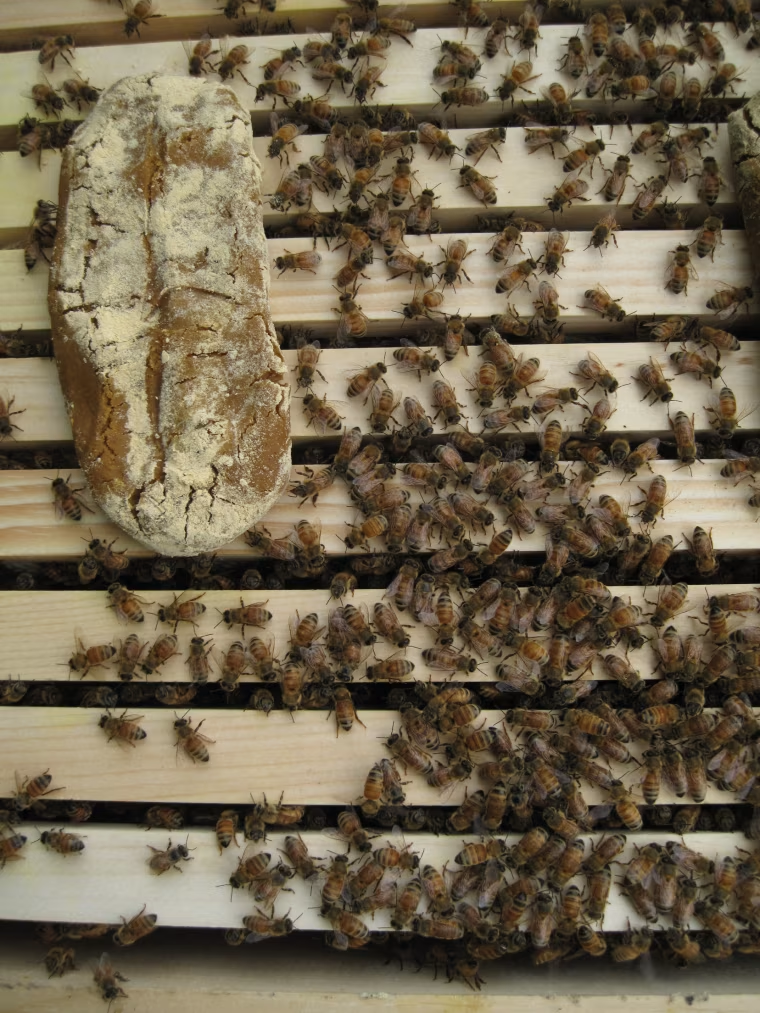
The bees didn't suffer negative effects until they were exposed to four times the normal level of the pesticide. The effects became more severe at 20 times the normal exposure levels, the researchers said.
















Dively and his colleagues acknowledged that neonics and other pesticides are causing trouble for bees around the world. "It contributes, but there is a bigger picture," Dively said in a news release.
Other factors are thought to include parasites such as Varroa mites and Nocema fungus, a bacterial disease known as foulbrood, viruses, drought and loss of habitat.

IN-DEPTH
- Study: Pesticides Aren't Biggest Factor in Bee Die-Off
- Neonicotinoids Linked to Decline of Birds (and Bees)
- Gallery: Bee Population Faces Serious Decline
SOCIAL
— Alan Boyle
In addition to Dively, the authors of "Assessment of Chronic Sublethal Effects of Imidacloprid on Honey Bee Colony Health" include Michael Embrey, Alaa Kamel, David Hawthorne and Jeffery Pettis.