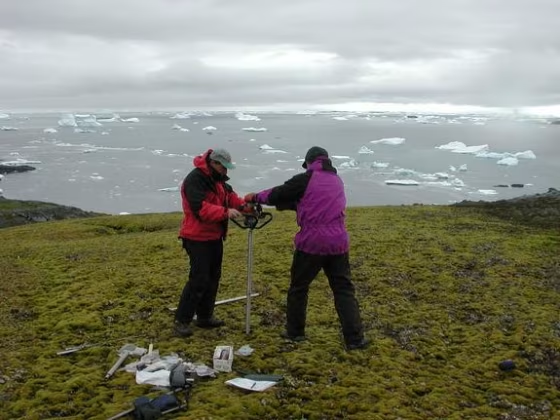
Moss frozen on an Antarctic island for more than 1,500 years was brought back to life in a British laboratory, researchers report.
The verdant growth marks the first time a plant has been resurrected after such a long freeze, the researchers said. "This is the very first instance we have of any plant or animal surviving [being frozen] for more than a couple of decades," said study co-author Peter Convey, an ecologist with the British Antarctic Survey.
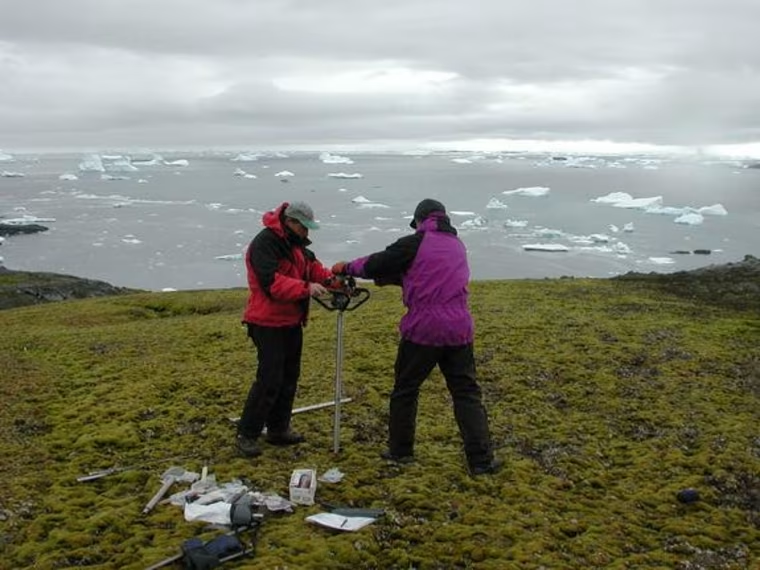
There is potential for even longer cryopreservation, or survival by freezing, if mosses are blanketed by glaciers during a long ice age, the researchers think. Antarctica's oldest frozen mosses date back more than 5,000 years. [See Stunning Photos of Antarctic Ice]

 FOR SUBSCRIBERSCBP leaders cut out of Trump ad buy decision









FOR SUBSCRIBERSA harrowing ordeal aboard an Israel-bound plane





FOR SUBSCRIBERSCBP leaders cut out of Trump ad buy decision
FOR SUBSCRIBERSA harrowing ordeal aboard an Israel-bound plane
The findings were published on Monday in the journal Current Biology.
The moss comes from Signy Island, a small, glacier-covered island in the Drake Passage offshore of the Antarctic Peninsula. On Antarctic islands and the continent's coastline, thick, lush moss banks thrive on penguin poop and other bird droppings. The moss acts like tree rings, with layer upon layer of fuzzy clumps recording changing environmental conditions, such as wetter and drier climate shifts.
The moss resurrection came about after Convey and his colleagues noticed that old moss drilled out of permafrost on Signy Island looked remarkably fresh. The deeper layers didn't decay into brown peat (a type of decaying organic matter), as they would in warmer spots.
"In North America, you've got living moss on top of a dead peat base. It's black, wet sticky stuff," Convey told Live Science. "If you look at these cores [from Signy Island], the base is very well-preserved. They've got a very nice set of shoots."
- Becky Oskin, LiveScience
This is a condensed version of an article from LiveScience. Read the full report. Email Becky Oskin or follow her @beckyoskin. Follow us @livescience, Facebook & Google+.
- Images of Melt: Earth's Vanishing Ice
- 6 Extinct Animals That Could Be Brought Back to Life
- Life on Ice: Gallery of Cold-Loving Creatures
Copyright 2014 LiveScience, a TechMediaNetwork company. All rights reserved. This material may not be published, broadcast, rewritten or redistributed.