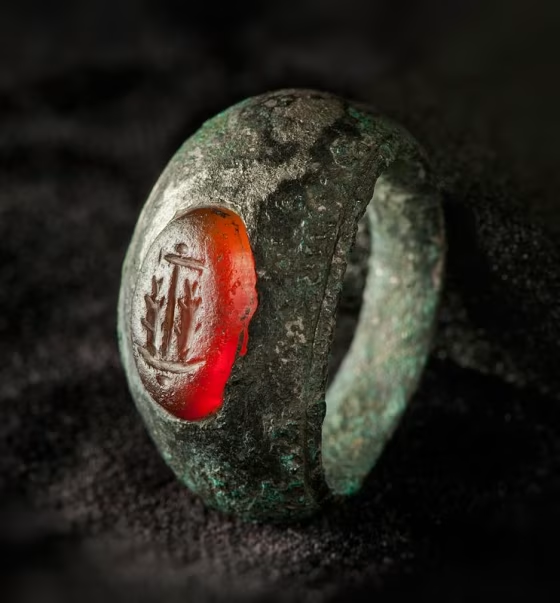
An archaeological site that's known as England's "Pompeii of the North" has yielded a fresh batch of Roman treasures from the third century, including a silver ring that provides the earliest evidence of Christianity in Britain. The ring is set with a tiny stone that bears the carvings of an anchor and two fish — symbols that early Christians used before Emperor Constantine embraced the faith in the fourth century.







 FOR SUBSCRIBERSA harrowing ordeal aboard an Israel-bound plane







FOR SUBSCRIBERSThe debate over AI’s future rages on both coasts

FOR SUBSCRIBERSA harrowing ordeal aboard an Israel-bound plane
FOR SUBSCRIBERSThe debate over AI’s future rages on both coasts
The Binchester site is located in County Durham, north of London. During Roman times, a fort and settlement known as Vinovia stood there. Archaeologists are in their sixth year of excavations, and they compare Binchester to Italy's Pompeii because the artifacts are so well-preserved. Other finds that were brought to light this week include an altar dedicated to the Roman goddess Fortune, and a bathhouse with 7-foot-high walls that were once covered with brightly colored designs. Last year, a student working at Binchester found a carved stone head that's thought to depict a Roman-Celtic god. There'll be guided tours of the site this weekend.
Sign up for Science news delivered to your inbox
IN-DEPTH
- Trove of Roman Art (and Erotica) Found in Britain
- Mysterious Ancient Altar Found in Roman Fort
- Roman Remains at Binchester (Past Horizons)
SOCIAL
— Alan Boyle, NBC News