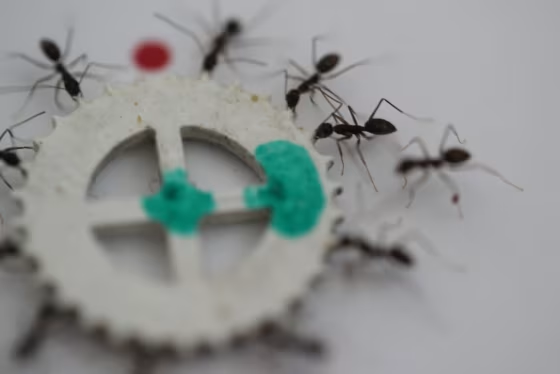
When a few dozen ants get together to carry a crumb or overpowered prey, how is it they know which way to go if they can't see or sense where the nest is? New research suggests they actually don't know, and simply tug in the direction their neighbors are going — until well-informed scout ants arrive to set everyone on the right path.

 FOR SUBSCRIBERSCBP leaders cut out of Trump ad buy decision









FOR SUBSCRIBERSA harrowing ordeal aboard an Israel-bound plane





Related: Bionic Animals Mimic Ants, Butterflies and Chameleons
FOR SUBSCRIBERSCBP leaders cut out of Trump ad buy decision
FOR SUBSCRIBERSA harrowing ordeal aboard an Israel-bound plane
Researchers from the Weizmann Institute of Science in Israel watched groups of longhorn crazy ants as they attempted to navigate bits of food toward their nests. By tracking the position of every ant carefully the researchers were able to determine that most ants, their antennae and vision obstructed by the food item itself, didn't attempt to steer the motion in any particular direction, but simply lifted and pushed or pulled whichever way their neighbors went.
Unattached ants, however, could tell which way the nest was, and would frequently grab the food and pull strongly in that direction. The other ants can tell that this stronger force is the one they should conform to, and go along with it. The informed ant, however, soon loses its sense of direction and a new scout ant must provide the necessary guidance.
The research, published Tuesday in Nature Communications, suggests a carefully tuned equilibrium among laboring ants that maximizes work while minimizing wasteful tug-of-wars.
