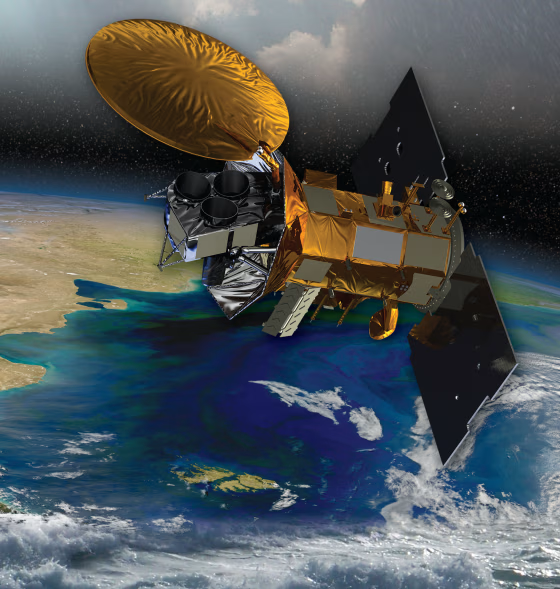
PASADENA, Calif. -- NASA says an international satellite studying salinity in the world's oceans has stopped working after nearly four years. The space agency said Wednesday that the Argentine-built satellite ceased operations last week after a hardware failure. The satellite carried a NASA instrument called Aquarius that measured the concentration of dissolved salt at the sea surface. The amount of brine in the ocean remains fairly constant, but salt levels in the uppermost layer vary around the globe.







 FOR SUBSCRIBERSA harrowing ordeal aboard an Israel-bound plane







FOR SUBSCRIBERSThe debate over AI’s future rages on both coasts

FOR SUBSCRIBERSA harrowing ordeal aboard an Israel-bound plane
FOR SUBSCRIBERSThe debate over AI’s future rages on both coasts
Scientists say the information gathered from the mission is helping to improve climate models. The satellite launched in 2011 from Vandenberg Air Force Base along the California Central Coast and completed its primary three-year mission in November 2014.
"The Aquarius sensor collected three years and nine months of valuable data," Aquarius principal investigator Gary Lagerloef said in a statement. "It was truly a pioneering effort to determine how accurately we could measure ocean salinity from space and for the first time study large and small-scale interactions of the global water cycle."