Patches of water ice appear to be speckled across the surface of a comet, according to a new study using observations from a European space probe.
The Rosetta spacecraft, currently orbiting Comet 67P/Churyumov–Gerasimenko, spotted 120 bright, reflective spots on the surface of the comet that were at least a couple of meters (about 6 feet) in size. While their composition is still being examined, the spots tend to appear in areas that are shaded by the sun, scientists noted. The researchers also noted that there have been no significant changes to the spots after a month of observations.
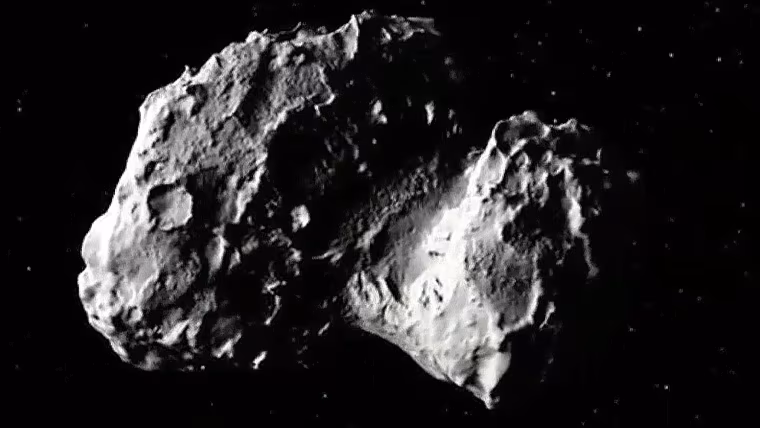
"Water ice is the most plausible explanation for the occurrence and properties of these features," Antoine Pommerol, a physicist at the University of Bern and the lead author of a study analyzing the spots, said in a statement. [Photos: Europe's Rosetta Comet Mission in Pictures]
The spots are up to 10 times brighter than the average surface brightness of the comet, as measured by Rosetta. Sometimes they appear together, particularly when they are at the bottom of cliffs. The research team speculates this is because the cliff wall recently eroded or collapsed, revealing material below the dusty surface.







 FOR SUBSCRIBERSA harrowing ordeal aboard an Israel-bound plane







FOR SUBSCRIBERSThe debate over AI’s future rages on both coasts

It's not clear when the ice patches formed, but the team has two hypotheses. The first suggests that when 67P was closest to the sun, 6.5 years ago, cometary activity pushed the icy chunks into shadowed regions and protected them from the sun. Alternatively, perhaps carbon monoxide and carbon dioxide beneath the surface pushed the ice around while the comet was farther from the sun.
FOR SUBSCRIBERSA harrowing ordeal aboard an Israel-bound plane
FOR SUBSCRIBERSThe debate over AI’s future rages on both coasts
Results from the observations were published in the journal Astronomy & Astrophysics and are based on observations by the OSIRIS narrow-angle camera taken last September, one month after Rosetta arrived at the comet.
This is a condensed version of a report from Space.com. Follow Elizabeth Howell on Twitter, and follow Space.com on Twitter, Facebook and Google+.