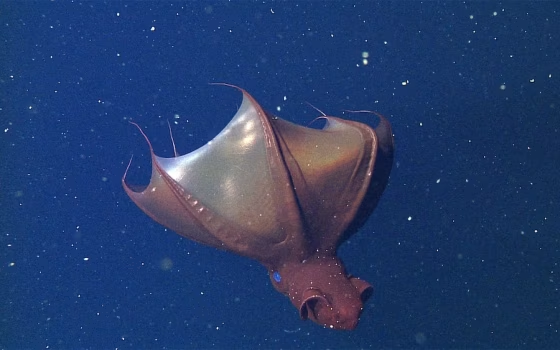
No one has ever seen vampire squid mate in the wild. But new research hints that the deep-sea creatures have a reproductive strategy that sets them apart from other cephalopods.
While most female squid and octopuses have just one reproductive cycle before they die, vampire squid go through dozens of egg-making cycles in their lifetimes, scientists have found.
The discovery suggests vampire squid may live several years longer than coastal squid and octopuses. [See Photos of Vampire Squid from Hell]
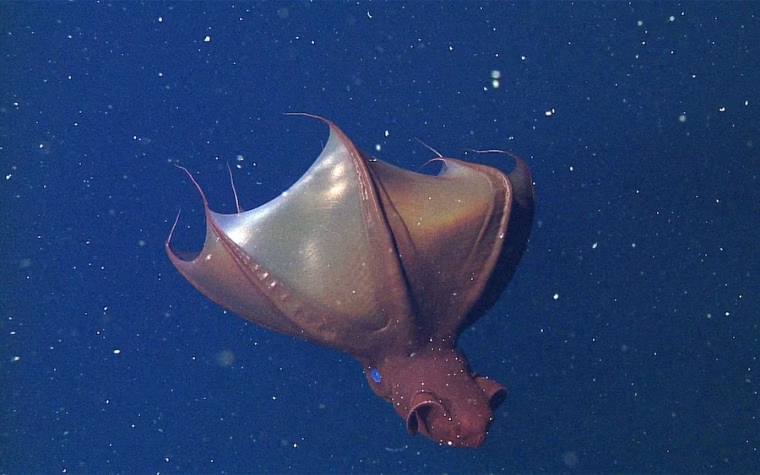
During mating, the male squid gives the female a sperm packet, which somehow gets mobilized once she is ready to release her eggs, said Henk-Jan Hoving of the GEOMAR Helmholtz Centre for Ocean Research Kiel in Germany. Scientists don't know too much about how this process works in vampire squid because their mating has never been observed.
To learn more about the species' reproductive habits, Hoving and his colleagues looked at the ovaries of more than 40 vampire squid specimens that had been preserved in jars of alcohol since the 1960s and 1970s at the Santa Barbara Museum of Natural History.
The researchers found evidence that many of the females had already spawned but still had the ability to produce more eggs.

 FOR SUBSCRIBERSCBP leaders cut out of Trump ad buy decision









FOR SUBSCRIBERSA harrowing ordeal aboard an Israel-bound plane





FOR SUBSCRIBERSCBP leaders cut out of Trump ad buy decision
FOR SUBSCRIBERSA harrowing ordeal aboard an Israel-bound plane
The most developed female in the study — which weighed just a pound (448 grams) and measured 4 inches (10 cm) long — had released at least 3,800 eggs before her death, but still had about 6,500 viable immature egg cells for future spawning, the scientists found.
If there are an average of 100 eggs in a clutch, this female had spawned at least 38 times and was prepared to spawn another 65 times. Based on these numbers, the scientists think the vampire squid's adult stage lasts up to eight years, with an even longer total life span. Most squids and octopuses, meanwhile, spawn just once and don't live beyond one or two years.
"If they indeed live much longer, then it's important to know," Hoving told Live Science. "Age and longevity are very important parameters to understand how an ecosystem works."
The new findings were published Monday (April 20) in the journal Current Biology.
— Megan Gannon, Live Science
This is a condensed version of a report from Live Science. Read the full report. Follow Megan Gannon on Twitter. Follow Live Science @livescience, Facebook & Google+.