Even cavemen had to deal with pollution. Researchers found evidence of charcoal in 400,000-year-old tartar, a sign that early Paleolithic people had inhaled smoke while roasting meat indoors.
The tartar was found on teeth discovered in the Qesem Cave near Tel Aviv, Israel. Sealed for 200,000 years, the cave preserved the chompers extraordinarily well for scientists to examine later.
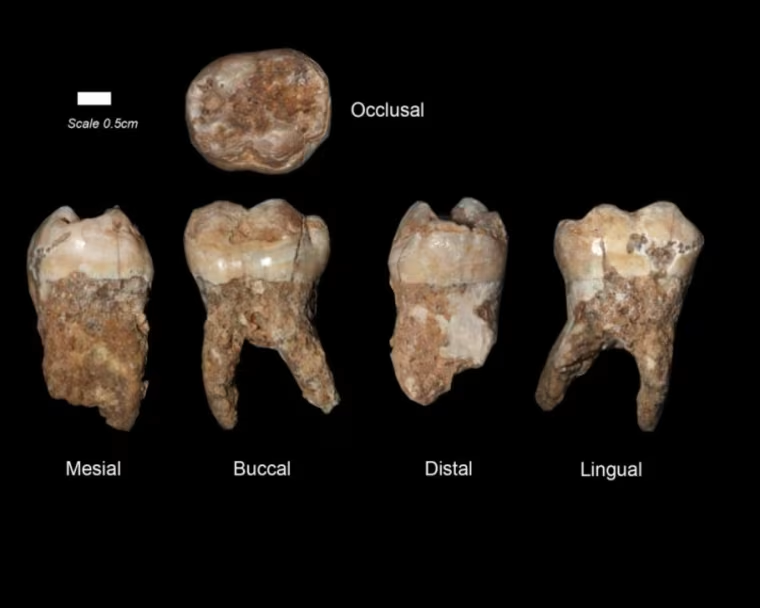
The teeth served as a "time capsule," according to University of Tel Aviv archaeologist Ran Barkai, providing evidence that early humans inhaled smoke from indoor fires, ate plants, and even used plant fibers as prehistoric toothpicks.







 FOR SUBSCRIBERSA harrowing ordeal aboard an Israel-bound plane







FOR SUBSCRIBERSThe debate over AI’s future rages on both coasts

FOR SUBSCRIBERSA harrowing ordeal aboard an Israel-bound plane
FOR SUBSCRIBERSThe debate over AI’s future rages on both coasts
"This is the first evidence that the world's first indoor BBQs had health-related consequences," Barkai said in a statement. "The people who lived in Qesem not only enjoyed the benefits of fire — roasting their meat indoors — but they also had to find a way of controlling the fire — of living with it."
The study was published Wednesday in the journal Quaternary International.
Barkai and his team also found evidence of essential fatty acids, possibly from nuts and seeds. Similar research was conducted on the teeth of Neanderthals from 40,000 to 50,000 years ago in El Sidron cave in Spain.
