Ebola takes hold quicker in the very youngest patients and kills more of them, a new report finds.
The death rate among babies ranges from 85 to 90 percent among babies under age 1, the World Health Organization’s Ebola Response Team, led by Christopher Dye, found.
“The case fatality rate was lowest among children between 10 and 15 years of age and highest among those 4 years of age or younger,” they write in a letter to the New England Journal of Medicine.
The Ebola epidemic isn’t spreading as fast or out of control as it was last year, but it’s still bad, with nearly 25,000 people infected in Guinea, Sierra Leone and Liberia over the past year. And more than 10,000 have died.
The WHO team says there’s enough data now to see just who Ebola affects the worst. While it’s not as likely to infect the youngest children, they found, it’s far more likely to kill them.
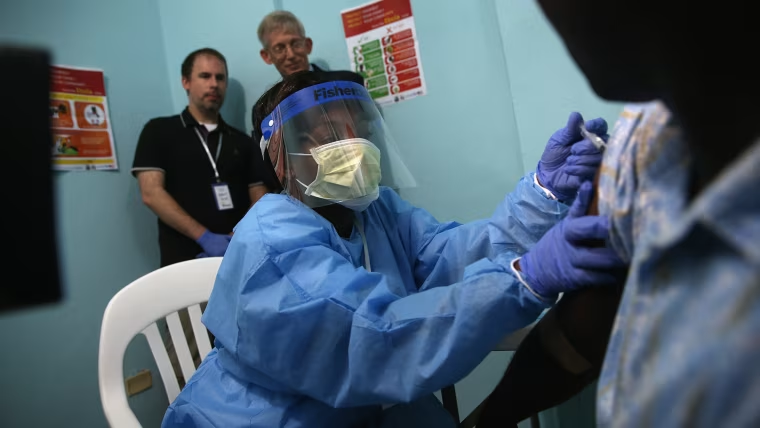
Mortality rates were between 80 and 95 percent for infants under age 1, between about 70 and 90 percent for babies and toddlers aged 1-4 and as high as 75 percent for 5-6 year olds,” the team found.







 FOR SUBSCRIBERSA harrowing ordeal aboard an Israel-bound plane







FOR SUBSCRIBERSThe debate over AI’s future rages on both coasts

The average incubation period – the time from when someone is infected to when symptoms begin to show – was just about seven days in babies while it was almost 10 days in kids aged 10 to 15.
FOR SUBSCRIBERSA harrowing ordeal aboard an Israel-bound plane
FOR SUBSCRIBERSThe debate over AI’s future rages on both coasts
“The shorter incubation period in children, the relatively high risk of death among children younger than 5 years of age (as compared with older children), and the more rapid progression to death highlight the importance of including children among case contacts for follow-up, of examining children for early signs of disease during active case finding, and of explaining the risk of Ebola to parents, guardians, and caregivers,” they wrote.
“All persons in whom Ebola virus disease is suspected, but especially children, need the earliest possible referral for diagnostic testing, and children need age-appropriate treatment,” they added.
IN-DEPTH:
- How Ebola Eludes Even Experts
- US Ebola Patient in Critical Condition
- Guinea Ebola Vaccine Trial Uses Smallpox Strategy
-- Maggie Fox