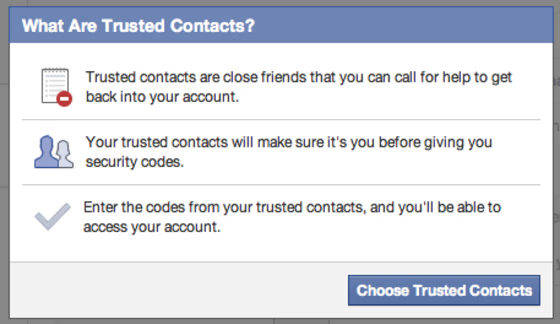
Facebook wants you to designate people who are trustworthy enough to get secret access codes on your behalf ... just in case you ever misplace your Facebook password.







 FOR SUBSCRIBERSA harrowing ordeal aboard an Israel-bound plane







FOR SUBSCRIBERSThe debate over AI’s future rages on both coasts

Some users have had access to the previous iteration of the Trusted Contacts feature for a couple of years, when Facebook first began testing it (under the name "Trusted Friends"). It's optional and fairly simple to use. All you have to do is open up the Trusted Contacts tab in your Security Settings. There you select at least three (and up to five) friends as "trusted contacts." In case you ever have trouble logging into Facebook, those individuals will receive secret codes with instructions to get them to you. Once you have three codes, you enter them and regain access to your Facebook account.
The potential flaw with this security feature is ... well, human. No single trusted contact can get into your account with the code he or she receives, but if three happen to gang up on you and combine their codes, they could theoretically hijack your Facebook account. So be careful when picking them. "Choose people you trust, like friends you’d give a spare key to your house," Facebook's security team suggests.
FOR SUBSCRIBERSA harrowing ordeal aboard an Israel-bound plane
FOR SUBSCRIBERSThe debate over AI’s future rages on both coasts
We hope that Facebook might eventually allow Trusted Contacts to evolve into a feature similar to Google's Inactive Account Manager. With that, users are able to designate individuals who'll receive their digital assets — their data — once they die. In order for someone to access a deceased person's Facebook data right now, he or she must endure a lengthy process, and even file a court order. We asked Facebook if there are plans to make any changes to this process, but a spokesperson for the social network refrained from commenting.
Want more tech news or interesting links? You'll get plenty of both if you keep up with Rosa Golijan, the writer of this post, by following her on Twitter, subscribing to her Facebook posts, or circling her on Google+.