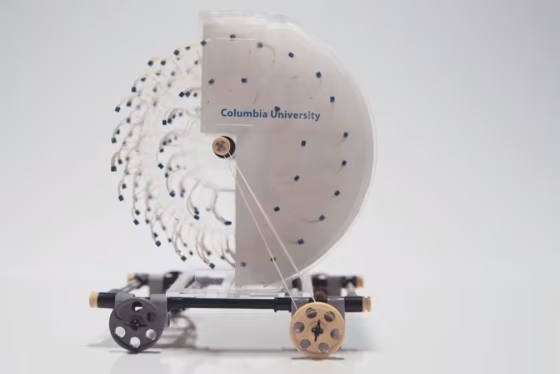
Researchers at Columbia University have created a way to harvest energy from the imperceptible process of water evaporation, using it to power tiny machines. Ozgur Sahin and his team found that when certain bacterial spores absorb water, they expand, and then shrink down again as they dry. "This process is very similar to a muscle movement," explained Sahin in a video showcasing the research. The combined force of billions of those spores creates a small but measurable force — and all that's needed to activate them is a bit of moist air.







 FOR SUBSCRIBERSA harrowing ordeal aboard an Israel-bound plane







FOR SUBSCRIBERSThe debate over AI’s future rages on both coasts

Related: Scientists Aspire to Nature's Genius With 'Biomimetic' Research
The team made a pair of "evaporation engines" to harness that force: First, a set of shutters that lift as the "muscles" extend, then expel the wet air and reset. Second, a rotary engine that spins because only one side is exposed to the moist air that fuels the spores' work. The latter device is actually capable of driving a wheel and scooting itself along a table (at about the 3-minute mark in the video below).
Related: Teenager invents flashlight powered by the warmth of your hand
FOR SUBSCRIBERSA harrowing ordeal aboard an Israel-bound plane
FOR SUBSCRIBERSThe debate over AI’s future rages on both coasts
In the future, these spore muscles could work as autonomous machines that operate super-efficiently when in proximity to water. A vent that opens itself when humidity is too high? A water-skimming machine that runs on the vapor rising from where it floats? A clock or light powered by ambient moisture? All these are possibilities as the team improves the process and explores applications.
The paper describing the research appeared Tuesday in the journal Nature Communications.
