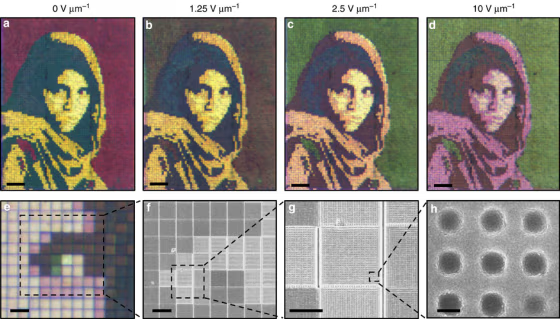
Researchers at the University of Central Florida have created a new kind of full-color display that's a fraction of the width of a human hair and just as flexible. Debashis Chanda and his team have worked in ultra-thin, nano-sculpted materials for years, but this technology is perhaps the most impressive — and marketable — result yet.
"All man-made displays — LCD, LED, CRT — are rigid, brittle and bulky," said Chanda in a news release. "But you look at an octopus, they can create color on the skin itself covering a complex body contour, and it's stretchable and flexible. That was the motivation: Can we take some inspiration from biology and create a skin-like display?"
Related: Scientists Aspire to Nature's Genius With 'Biomimetic' Research
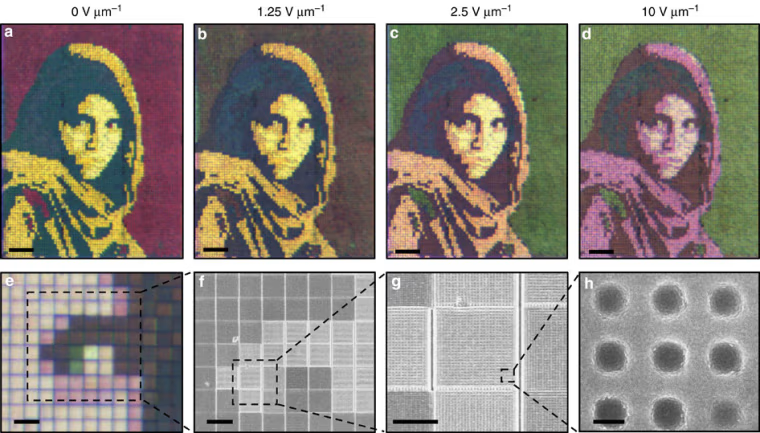
The "plasmonic nanostructure" they created is covered in tiny wells that reflect some wavelengths of light but absorb others. Sandwiched on top of these are microscopic layers of liquid crystal, which can also select for different wavelengths. The two work together and each tiny pixel will reflect a specific color based on how much voltage is being applied.
Related: Cuttlefish's Shifting Colors Could Be Reproduced in 'Artificial Skin'
It's still very much in the early stages, but the display's thinness and range of color are well ahead of competing technologies — traditional LCDs, OLEDs and e-paper displays are hundreds of times thicker, and can't pack nearly as many pixels into a given area.







 FOR SUBSCRIBERSA harrowing ordeal aboard an Israel-bound plane







FOR SUBSCRIBERSThe debate over AI’s future rages on both coasts

FOR SUBSCRIBERSA harrowing ordeal aboard an Israel-bound plane
FOR SUBSCRIBERSThe debate over AI’s future rages on both coasts
The technology won't replace your smartphone display or TV, but it might lead to a new standard for color-changing clothing, camouflage, or other applications where flexibility and color are highly valued. Chanda's research appeared in the June issue of Nature Communications.
